The Middle East is heating up again. Markets, for now, don’t seem to care.
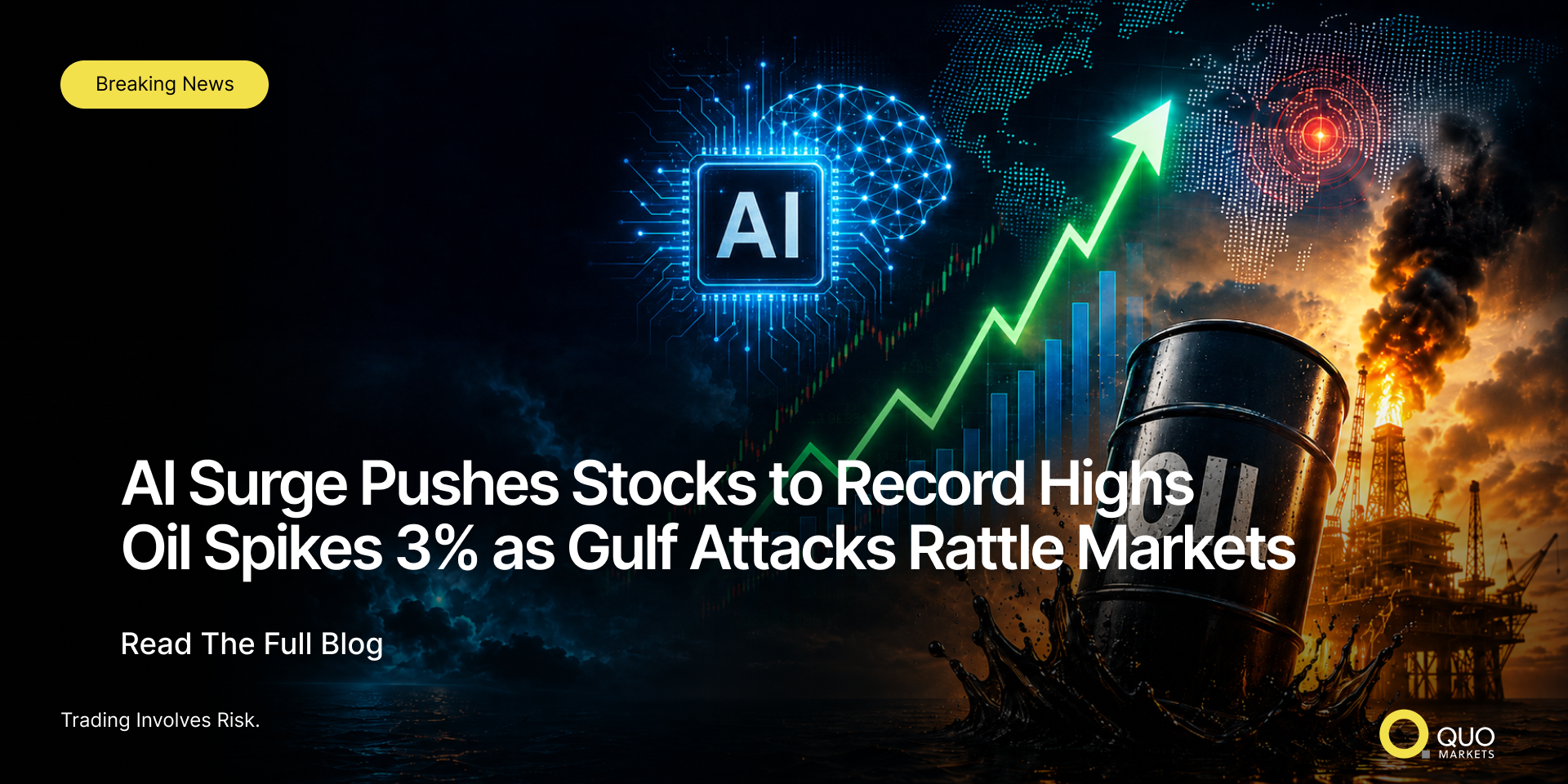
Global stocks closed at all-time highs on Monday, carried by the same force that’s been driving this rally for months: artificial intelligence. Fresh U.S. strikes on Iranian targets over the weekend, followed by Kuwait intercepting missile and drone attacks, rattled energy markets but did little to cool investor appetite.
The Numbers That Matter
Brent crude surged close to 3%, hitting $94 a barrel after the Gulf attacks. Yet equity markets shrugged it off. The MSCI All-World index rose 0.13%, hovering near record territory. S&P 500 futures added 0.3%, and Nasdaq futures climbed 0.5%.
The AI story got fresh fuel from South Korea’s trade data: May exports hit a record $87.75 billion, the fastest annual growth in over 40 years, driven largely by AI-related demand. Meanwhile, NVIDIA CEO Jensen Huang took the stage at Computex in Taiwan to lay out the company’s next AI roadmap, exactly the kind of headline this market feeds on.
How Bonds, Currencies, and Equities Responded
Higher oil prices pushed bond yields up. The U.S. 10-year yield ticked up 1 basis point to 4.46%, while Germany’s 10-year jumped 4.2 bps to 2.98%. The dollar gained 0.12% against the yen, bringing the pair to 159.46, uncomfortably close to the 160 level that has historically pulled Japanese authorities into the market.
European stocks dipped slightly. Energy shares gained, but airlines and defence names dragged the broader index lower. Tokyo and Seoul, meanwhile, held near their own record highs.
What Traders Are Actually Watching
Markets are currently pricing a 50/50 chance the Fed raises rates before year-end. That keeps the dollar supported and puts a ceiling on bond prices. If Gulf tensions escalate further, especially if they derail any progress on an Iran-U.S. deal, oil could spike again, inflation picks back up, and the Fed’s options narrow fast.
For now, AI momentum is absorbing that uncertainty. But the balance is fragile.
The Week Ahead
Friday’s U.S. jobs report is the main event. Expectations sit at 85,000 new jobs, with unemployment holding at 4.3%. A stronger print would firm up rate hike bets and likely push the dollar higher. Fed speakers throughout the week will be closely watched for any hint of a shift from their current wait-and-see tone.
On the geopolitical side, any movement or standstill on Iran-U.S. negotiations remains the biggest wildcard for oil prices and overall market mood.
Stay ahead of every market-moving headline with QuoMarkets.