
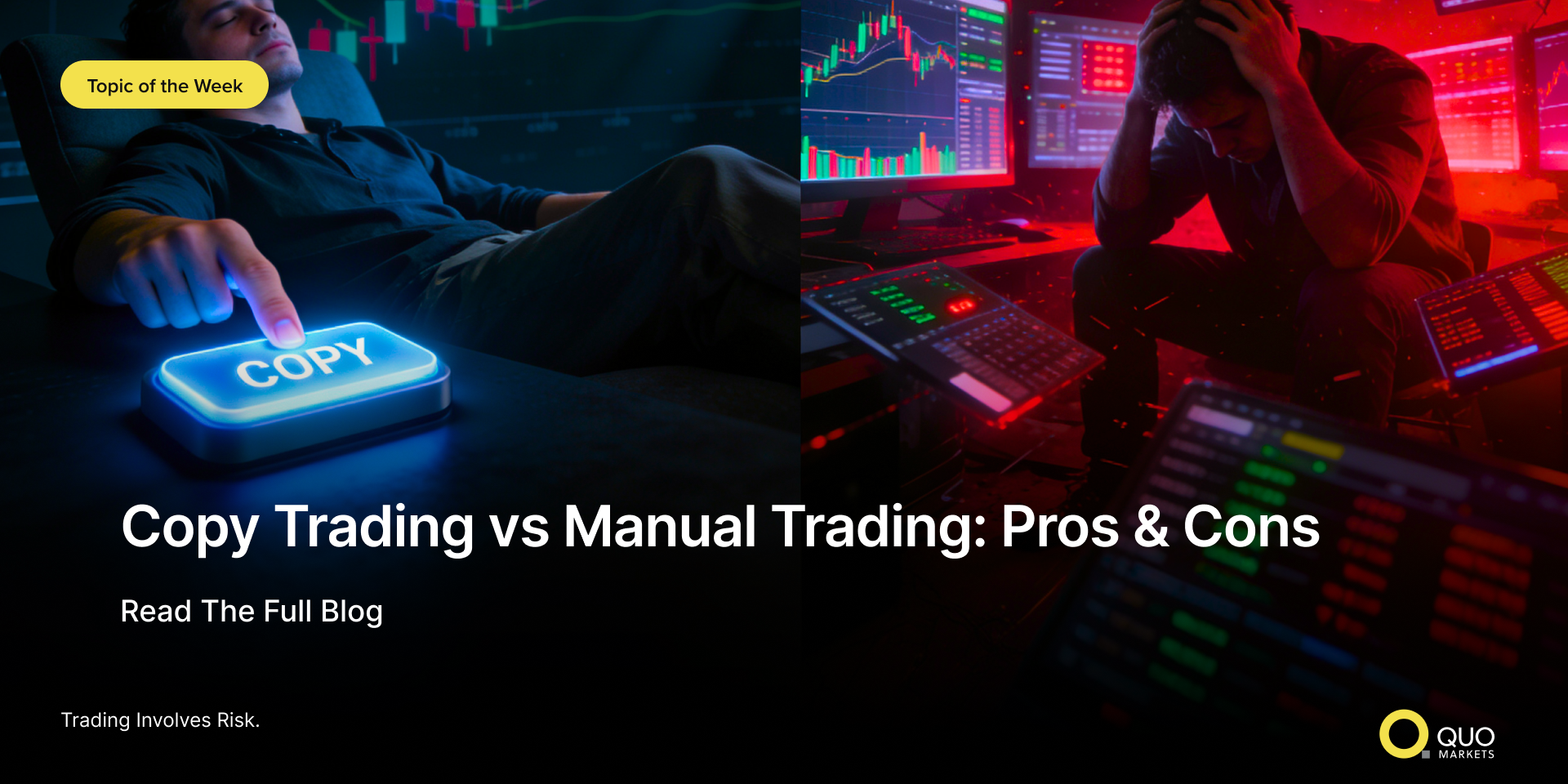
Copy Trading vs Manual Trading: Benefits & Drawbacks
Deciding how to approach the financial markets is one of the biggest choices any trader will face. Copy trading and manual trading represent two very different ways of thinking, and understanding how they work can save you from unnecessary losses, wasted time, and frustration.
Copy trading lets you automatically follow the moves of experienced traders, while manual trading puts you fully in control of every decision. Neither option is inherently better than the other. What truly matters is which one fits your lifestyle, experience level, and financial goals.
Let’s take an honest look at both so you can decide what suits you best.
How Copy Trading Works and Who It’s For
Copy trading is exactly what the name suggests. You link your account to experienced traders, and your platform automatically mirrors their trades in real time. When they buy Bitcoin, you buy Bitcoin. When they close a position, so do you. It turns active trading into a mostly hands-off experience.
In the past, access to top-level trading expertise was limited to wealthy investors. Today, copy trading has opened that door to almost everyone. With just a small deposit and a smartphone, you can browse trader profiles, review their performance, risk levels, and past drawdowns, and choose who manages part of your capital.
That accessibility makes copy trading especially appealing to beginners who may feel intimidated by charts, indicators, and economic data.
Advantages of Copy Trading
One of the biggest advantages is the time you save. Not everyone can sit in front of multiple screens all day watching price movements. Whether you have a full-time job, a family, or simply other priorities, copy trading allows you to stay involved in the market without dedicating your entire day to it.
It can also serve as a powerful learning tool. If you actively observe what’s happening, you’ll start to understand how experienced traders react to market conditions, where they place stop losses, and how they build positions. This kind of real-time exposure can accelerate your learning curve significantly.
Another benefit is diversification. Instead of relying on a single trader, you can spread your funds across several traders with different strategies. For example, one might focus on steady forex trades, while another takes advantage of crypto volatility. This helps balance risk across your portfolio.
The Risks Involved in Copy Trading
That said, copy trading is not as effortless as it may seem. One of the biggest dangers is becoming too passive. It’s tempting to “set it and forget it,” but that mindset can lead to serious losses.
Past results don’t guarantee future performance. A trader who performed well last month could suddenly struggle due to changing market conditions or poor decisions. If you’re not paying attention, your account can suffer along with theirs.
Another downside is the lack of control. When you copy someone, you follow all their trades – good and bad. You don’t get to choose which positions to skip. This can be frustrating, especially if a trade goes wrong due to a decision you wouldn’t have made yourself.
There’s also a psychological aspect. Losing money on your own decisions can be a learning experience. Losing money because of someone else’s mistakes often just feels frustrating. And finally, many platforms charge fees or take a percentage of profits, which can reduce your overall returns.
Smart Way to Choose
If you decide to try copy trading, approach it carefully. Think of it like hiring someone to manage your money.
Don’t just pick traders with the highest returns; that often means they’re taking the biggest risks. Instead, focus on consistency. Look at how they performed during difficult market periods. Did they protect their capital, or did they panic?
Check their risk score, track record, and overall stability. Most importantly, don’t rely on just one trader. Spread your investment across multiple strategies to reduce risk.
What Is Manual Trading?
If copy trading is like autopilot, manual trading is like flying the plane yourself. It requires you to analyze the market, build your own strategy, and make every trading decision independently. It’s more demanding and often more challenging, but many traders prefer it because it gives them full control.
Manual trading is about developing skills and understanding the mechanics, not just calculating the profits. There’s a big difference between copying success and achieving it through your own decisions. Every trade reflects your discipline, strategy, and emotional control.
The Pros of Manual Trading
The biggest advantage here is control. You don’t have to rely on anyone else. If unexpected news hits the market, you can react immediately. You can adjust your trades, manage risk, and make decisions based on your own judgment in real time.
Manual trading also forces personal growth. When things go wrong, you have to analyze your mistakes and improve. Over time, this builds experience, confidence, and a trading style that fits your personality.
This process is what separates beginners from experienced traders. You develop intuition and discipline, skills that cannot be copied from others.
The Cons of Trading Manually
However, manual trading comes with its own difficulties. It requires a significant time commitment. You need to monitor the market, stay updated with news, and constantly refine your strategy. Balancing this with work or family responsibilities can be overwhelming.
Then there’s the emotional challenge. Fear, greed, and impatience can all affect your decisions. You might exit profitable trades too early or hold losing trades for too long. These emotional mistakes are one of the biggest reasons traders fail. Learning to control these reactions takes time, experience, and discipline.
Plan Before Starting
If you choose manual trading, having a clear plan is essential. Before entering any trade, you should already know your entry point, exit strategy, and stop-loss level. You also need a solid risk management approach, ensuring that no single trade risks too much of your account.
Without these rules, trading quickly turns into gambling.
The Key Differences That Matter
When comparing copy trading and manual trading, the right choice depends largely on your situation.
Copy trading is more passive, making it ideal for beginners or those with limited time. It allows you to benefit from experienced traders without needing years of practice.
Manual trading, on the other hand, is about independence and mastery. It offers complete control and flexibility but requires more effort and comes with a higher risk of personal mistakes.
While copy trading platforms provide built-in tools like stop losses and automation, manual trading allows for immediate, personal adjustments based on your own decisions.
| Feature | Copy Trading | Manual Trading |
| Control | Limited; follows others | Full control |
| Time Needed | Low; mostly automated | High; requires constant input |
| Skill Level | Beginner friendly | Requires experience |
| Learning | Observational | Hands-on |
| Risk | Depends on others | Depends on your decisions |
Final Thoughts
There’s no clear winner between these two approaches. In fact, many traders now combine both. A hybrid strategy allows you to allocate part of your funds to copy trading for diversification, while using the rest to develop your own manual trading skills. This way, you can earn while learning.
Ultimately, your choice should depend on how much time you can commit and how comfortable you are with risk. If you want a simple and accessible entry point, copy trading is a strong option. If your goal is to become a skilled trader with full control, manual trading is the better path.
Whichever route you take, one principle remains constant: strong risk management is the foundation of long-term success.