
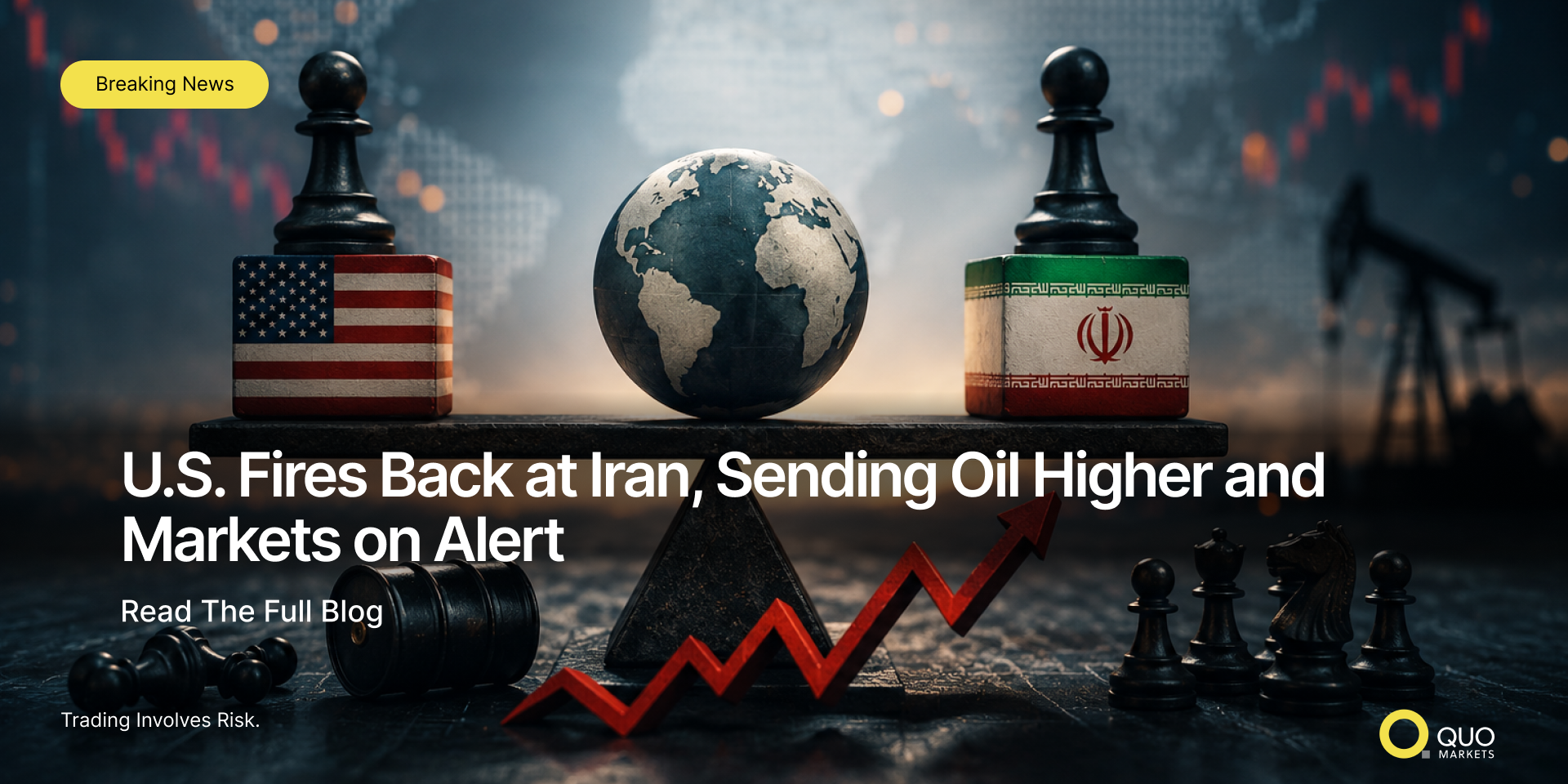
The attack shatters ceasefire hopes and sends oil, crypto, and risk assets into a tailspin.
The U.S. military launched fresh strikes against Iran on Tuesday after an American Apache helicopter was downed over the Strait of Hormuz, the latest flashpoint in a conflict that has kept global markets on edge since February.
What Happened
U.S. Central Command confirmed the strikes began at 5 p.m. ET, targeting Iranian air defense systems, ground control stations, and surveillance radar sites near the Strait of Hormuz. CENTCOM called it “a proportional response to unjustified Iranian aggression.” The strikes concluded just before 9 p.m. ET.
Iran’s state media reported explosions on Qeshm Island and the port city of Sirik. Trump confirmed both pilots were safe.
Iran’s Foreign Minister fired back, saying their armed forces “will leave no attack or threat unanswered.” Iran subsequently launched retaliatory strikes on Bahrain, Kuwait, and an air base in Jordan hosting U.S. forces.
Market Reaction
Oil prices climbed nearly 1% on June 10, reigniting fears over the Strait of Hormuz, a chokepoint responsible for roughly 20% of global oil transportation.
Bitcoin fell below $62,000, dropping around 2% over 24 hours as investors reduced exposure to risk assets amid fears of a wider regional conflict.
Why It Matters for Traders
Every escalation in the Strait of Hormuz tightens oil supply and hits risk assets hard. A U.S. official told CNN the strikes were designed as a warning shot, and the U.S. believes they won’t derail ongoing war negotiations, but additional strikes are expected. That uncertainty alone keeps volatility elevated across energy, crypto, and FX markets.
What to Watch Next
Monitor Iran’s counter-response, any movement in ceasefire talks, and Brent crude price action. A sustained close above key oil levels could signal the next leg of market disruption.
Stay ahead of every market-moving headline with QuoMarkets.