

Table of Contents
- Introduction: Gold CFDs vs Physical Gold
- What Is a Gold CFD and How Does It Work?
- Advantages of Trading Gold CFDs
- Disadvantages of Gold CFD Trading
- Benefits of Investing in Physical Gold
- Drawbacks of Physical Gold Investment
- Gold CFD vs Physical Gold: Key Differences at a Glance
- Which Option Is Better for Retail Traders?
- Frequently Asked Questions (FAQs)
Gold CFDs vs Physical Gold: Which One Makes More Sense for Retail Traders?
Gold has always had a special place in the financial world. When markets become uncertain or inflation starts eating into purchasing power, many investors naturally turn to gold for protection. But modern traders face a different question today: do you actually need to own physical gold to benefit from its price movements?
In many cases, the answer is no. Instruments like gold CFDs allow traders to speculate on gold prices without buying bars or coins. At the same time, physical gold continues to attract long-term investors who value direct ownership and long-term security.
The debate around gold CFD vs physical gold isn’t about finding a single winner. The better choice depends on your goals, your risk tolerance, and how long you plan to hold your position.
Let’s look at both options in detail.
What Is a Gold CFD and How Does It Work?
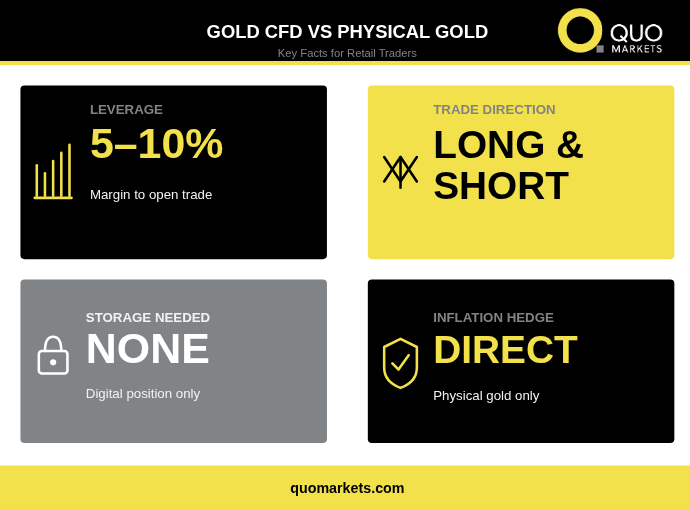
A gold CFD, or Contract for Difference, is a derivative product that lets traders speculate on gold price movements without owning the metal itself. When you open a gold CFD trade, you agree with your broker to exchange the difference in gold’s price between the moment you enter the trade and the moment you close it.
In simple terms, you’re trading the price of gold, commonly shown as XAU/USD, in real time. If you expect gold prices to rise, you open a buy position. If you believe prices will fall, you open a sell position. Your profit or loss depends on how far the market moves and the size of your trade.
Gold CFDs are usually traded using margin. This means you only need to deposit a percentage of the full trade value to control a much larger position. For example, a broker may require 5% or 10% margin to open the trade.
That makes gold CFDs very different from purchasing physical bullion or coins. There’s no delivery, no storage, and no vault involved. Everything happens through your broker’s trading platform, where you can manage trades using stop-losses, take-profit levels, and live market analysis tools.
For retail traders focused on short-term opportunities or portfolio hedging, gold CFDs provide flexibility that physical ownership simply can’t offer.
Advantages of Trading Gold CFDs
Leverage Increases Market Exposure
One major reason traders prefer gold CFD trading is leverage. Instead of paying the full value of a gold position upfront, you can control a larger trade with a smaller deposit. Even relatively small moves in XAU/USD can create noticeable gains on your invested capital.
For active traders, this allows more efficient use of capital. Money that would otherwise be tied up in buying physical gold can remain available for other trades or risk management purposes.
You Can Trade Rising and Falling Markets
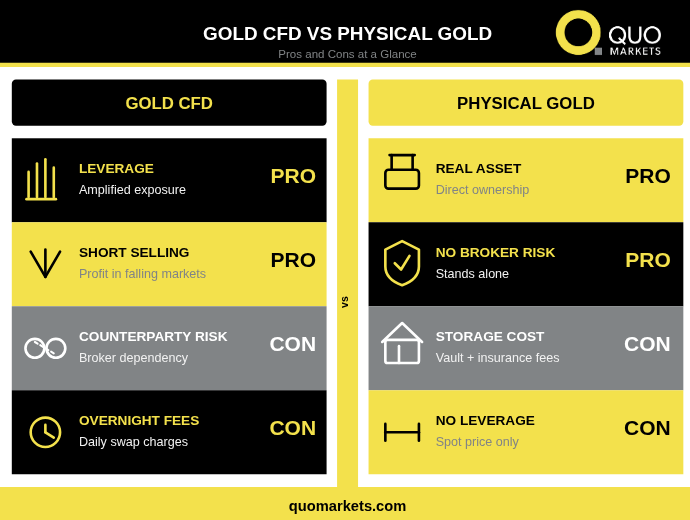
Physical gold only becomes profitable when prices increase. Gold CFDs allow traders to profit in both directions by going long or short.
During periods of strong gold volatility caused by geopolitical tensions, Federal Reserve decisions, or changes in safe-haven demand, traders can take advantage of both upward and downward market moves.
No Storage or Insurance Hassles
Trading gold CFDs removes the need to deal with storage, transport, or insurance. There’s no concern about securing bullion or checking authenticity. Positions exist digitally inside the trading platform and can be opened or closed within seconds during market hours.
Strong Liquidity and Tight Spreads
Gold CFDs benefit from the enormous liquidity of the global gold market. Most major brokers offer tight spreads and fast order execution. This makes it easier for retail traders to enter and exit positions quickly, even during major market events.
Disadvantages of Gold CFD Trading
Counterparty Risk Exists
When trading a gold CFD, you do not own actual gold. Your position is a contract with your broker. If the broker experiences financial trouble or operational failures, your funds and trades could be affected.
This counterparty risk is one of the biggest differences between gold CFDs and physical bullion. Choosing a properly regulated broker helps reduce the risk, though it can never remove it completely.
Overnight Fees Can Become Expensive
Leveraged trading comes with financing costs. Gold CFD positions held overnight are generally charged swap or financing fees every day.
For short-term traders, these costs may remain small. But for traders holding positions over weeks or months, overnight charges can significantly reduce profits and should always be included in cost calculations.
CFDs Are Restricted in Some Countries
Gold CFD trading is not available everywhere. Some regulators restrict or ban retail CFD trading because of the risks associated with leverage. Traders should always check whether CFDs are legally accessible in their country before opening an account.
Leverage Can Increase Emotional Pressure
Leverage can magnify profits, but it can also magnify losses just as quickly. Traders who underestimate gold volatility may lose more money than expected in a short period of time.
That’s why proper risk management matters. Position sizing and stop-loss orders are essential when trading leveraged products like gold CFDs.
Benefits of Investing in Physical Gold
You Own a Real Asset
Physical gold gives investors direct ownership of a tangible asset. Whether it’s gold bars or coins, you possess something with a long history of preserving value across centuries.
Unlike digital accounts or financial contracts, physical gold isn’t dependent on a broker, server, or institution to exist.
No Counterparty Risk
Physical gold carries no counterparty risk. A gold bar stored securely does not depend on a bank, broker, or financial institution to maintain its value.
This becomes especially important during financial crises, when trust in traditional financial systems may weaken.
Gold Has a Long History as an Inflation Hedge
Gold is widely viewed as protection against inflation and currency devaluation. Historically, gold prices have often risen during periods of elevated inflation or declining currency strength.
For long-term investors who want to protect purchasing power over decades, physical gold remains a traditional defensive asset.
Portfolio Diversification
Gold often behaves differently from stocks and bonds. During periods of market stress, gold prices may move independently or even opposite to equities.
Adding physical gold to a portfolio can help reduce overall volatility and improve diversification.
No Expiry Dates or Financing Charges
Unlike CFDs, physical gold does not expire and does not generate overnight financing fees. Once purchased, the investment can simply be held for as long as the owner chooses, aside from any storage or insurance expenses.
Drawbacks of Physical Gold Investment
Storage and Insurance Cost Money
Owning physical gold comes with practical responsibilities. Whether stored at home, in a bank deposit box, or through a professional vault service, storage creates additional costs.
Insurance expenses can also reduce long-term returns, especially during periods where gold prices remain stable.
No Leverage Limits Potential Returns
Physical gold only reflects the actual movement in gold prices. Investors cannot use leverage to increase exposure the way CFD traders can.
For traders looking to maximize market exposure with smaller amounts of capital, this can feel limiting.
Selling Gold Takes More Time
Liquidating physical gold is slower than closing a CFD trade. Selling bullion often involves dealers, delivery arrangements, and pricing below spot market value.
Compared to the instant execution available through online trading platforms, physical gold is less convenient for fast-moving markets.
Which Option Is Better?
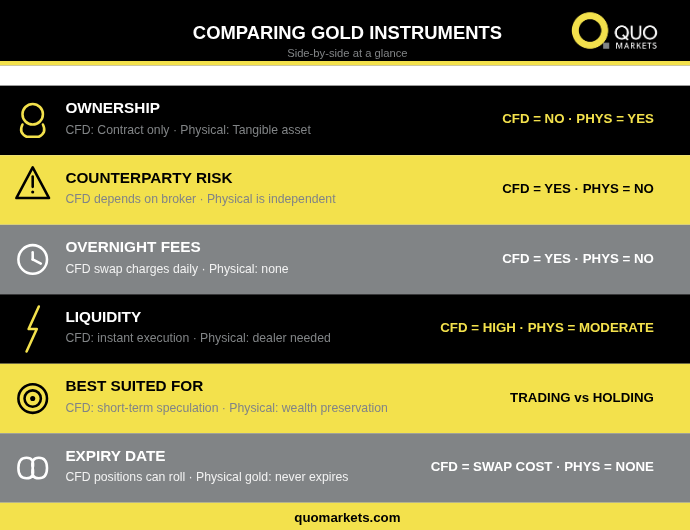
Neither gold CFDs nor physical gold is automatically better than the other. Each serves a completely different purpose.
If you’re an active retail trader looking to benefit from short-term gold price movements, hedge portfolio risk, or trade around Federal Reserve policy decisions, gold CFDs provide flexibility, leverage, and fast execution.
If your focus is long-term wealth protection, preserving purchasing power, or holding an asset outside the financial system, physical gold may be the stronger fit.
Many experienced investors combine both approaches. They use physical gold as a long-term defensive holding while trading gold CFDs for shorter-term opportunities. For some traders, this creates a more balanced strategy overall.
The important part is understanding your own goals, managing risk carefully, and building a strategy that fits your financial objectives.
FAQs
Is buying physical gold better than trading CFDs?
It depends on your objective. Physical gold is generally more suitable for long-term wealth preservation, while CFDs are commonly used for short-term trading and leveraged exposure. Some investors choose to use both.
Is physical gold a strong long-term investment?
Many investors consider physical gold a reliable long-term store of value and inflation hedge. However, unlike some other investments, it does not generate passive income.
What are the biggest risks of gold CFD trading?
The main risks include counterparty risk with brokers, overnight financing charges, and amplified losses caused by leverage. CFD availability may also depend on local regulations.
Do gold CFDs mean you own actual gold?
No. Trading gold CFDs only gives exposure to gold price movements. You do not own physical bullion or coins.
Can beginners trade gold CFDs safely?
Yes, but beginners should approach leveraged trading carefully. Starting with a demo account, using stop-losses, and trading smaller positions can help manage risk while learning.