
The Best Trading Journals of 2026 for Forex and CFD Traders
Imagine you closed a gold trade on Monday and felt great about it. By Friday, you can’t say why you opened it. Was it a breakout? A headline? A hunch after your third coffee?
That blank is expensive. Without a record of your reasoning, you can’t tell skill from luck, so the same mistakes keep coming back.
A trading journal fixes that. We’re not talking about a notebook that lives in a drawer. Modern journals pull in your trades automatically, calculate your stats, and show you patterns you’d never spot by eye. Below, we compare the top options for 2026, what they cost, and who each one suits.
Quick Takeaways
- A journal turns your trade history into feedback you can act on.
- Automatic imports save hours and remove typing errors.
- Pick a tool that matches your market (forex, metals, indices, crypto CFDs) and your platform.
- The best journal is the one you’ll open every day.
Why a Spreadsheet Isn’t Always Enough
Spreadsheets work, and many good traders start with one. The trouble is fatigue. Logging every entry, exit, lot size, and commission by hand is fine for a week. By week three, you’re skipping days, and skipped days are where your most useful data disappears.
Journal software removes that friction. It syncs with your account, does the maths, and then does what a spreadsheet can’t: it shows you why your results look the way they do.
Here’s what a good journal can reveal:
Your real strengths. Maybe your strategy isn’t failing. Maybe it only works during the London session, or only on EUR/USD, and bleeds everywhere else.
Your emotional habits. Notes made before and after a trade expose revenge trading, boredom trades, and the urge to cut winners short.
Your timing. Some traders lose most of their money in a single hour of the day, or on one day of the week. A journal finds that without being asked.
Your edge. An edge is a repeatable process, and a journal is the proof that yours repeats.
What to Look For in 2026

Use this checklist when comparing tools:
- Automatic import. Look for MT4/MT5 support or CSV upload, especially if you run several accounts.
- Clear analytics. Win rate, expectancy, drawdown, and results by pair, session, and strategy.
- Multi-asset coverage. Forex, gold, indices, crypto, and stock CFDs should all be tracked properly.
- Psychology tools. Tags and notes for setups, mood, and rule-breaking.
- Ease of use. If it feels like homework, you’ll quit.
- Room to grow. It should cope with more trades, more accounts, and more markets over time.
The Best Trading Journals Compared
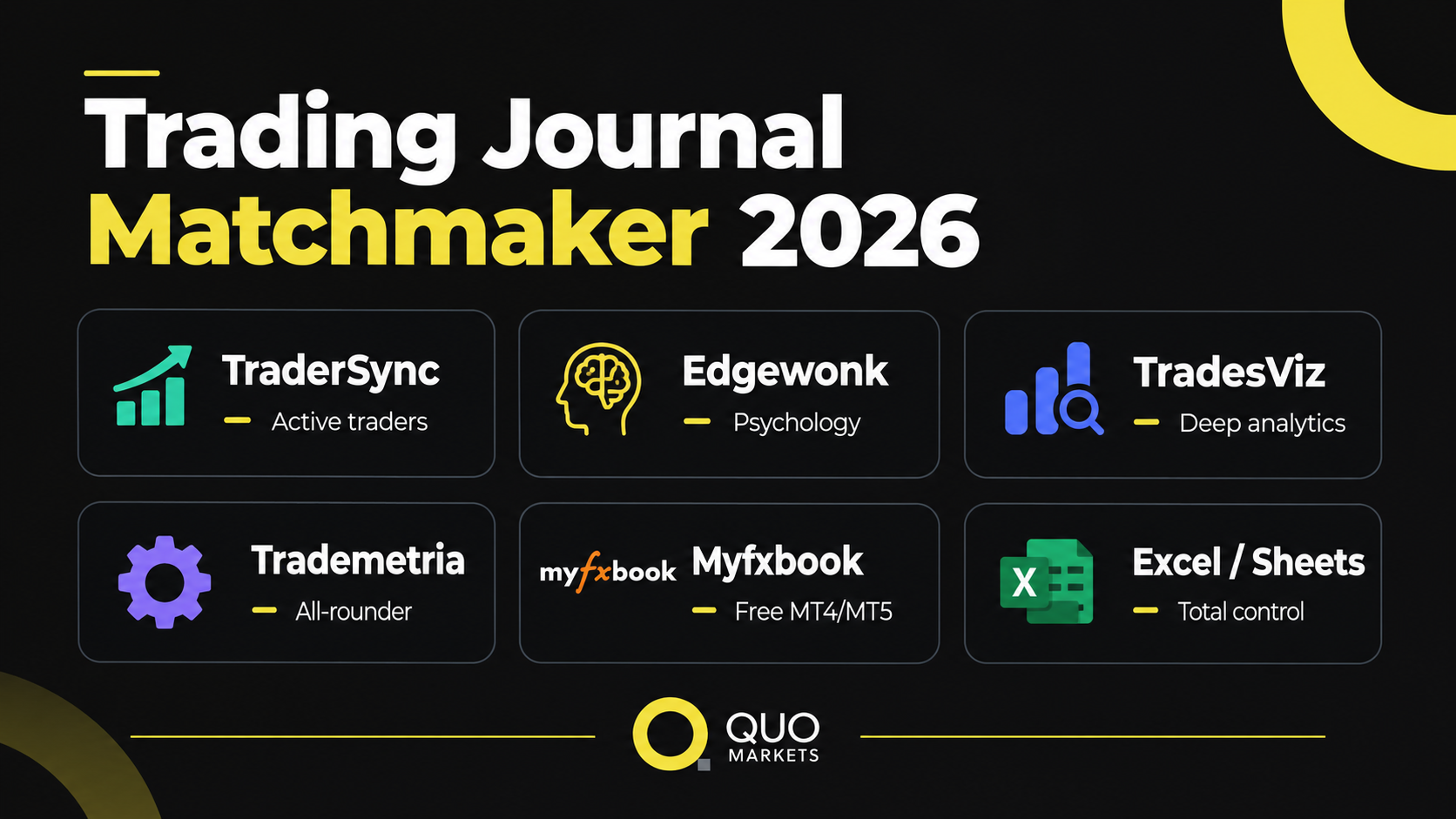
1. TraderSync: Best for Active Day Traders
If you take many trades a day, TraderSync is built for your pace. The interface is clean, it works well on mobile, and it connects to a very large list of brokers and platforms.
Standout features:
- Market replay lets you rewatch the price action around your entry, like studying game footage.
- AI insights flag patterns, such as a weaker win rate on one type of setup.
- Automatic imports keep your history current without typing.
Approximate pricing: Pro around $29.95/month, Premium around $49.95/month (includes replay), Elite around $79.95/month.
Worth knowing: It’s polished and beginner-friendly, but the best features sit on the higher tiers.
2. Edgewonk: Best for Trading Psychology
Edgewonk is less about the chart and more about the person clicking the mouse. It asks how you felt before, during, and after each trade, then connects those feelings to your results.
Standout features:
- Mental journal tracking for emotions and discipline.
- Milestones and challenges that keep you motivated.
- Potential performance analysis showing what rule-breaking cost you.
Approximate pricing: Around $197/year.
Worth knowing: It suits forex, futures, and swing traders who want to fix habits. Broker import coverage is narrower than TraderSync’s, so check your platform first.
3. TradesViz: Best for Data Lovers on a Budget
TradesViz offers an enormous number of charts and statistics, plus an AI assistant you can question in plain language.
Standout features:
- Hundreds of stats and visualizations.
- AI Q&A for your own trade data.
- Seasonality analysis.
Approximate pricing: A free tier (with monthly limits) and Pro plans from about $14.99 to $22.49/month on yearly billing.
Worth knowing: Great value, but the depth can overwhelm beginners, and the design is more functional than flashy.
4. Trademetria: Best All-Rounder
Trademetria covers forex, stocks, options, futures, crypto, and CFDs, with customizable dashboard widgets and a P&L simulator for “what if” scenarios.
Standout features:
- Customizable dashboard.
- Metrics like profit factor and Sharpe ratio.
- Reports that highlight your strongest setups.
Approximate pricing: Free plan limited to 30 orders/month. Pro at $29.95/month or about $249/year.
Worth knowing: Stable and easy to live with, but it has no replay feature, and the free plan nudges you to upgrade quickly.
5. Myfxbook: Best Free Option for MT4/MT5 Accounts
If you trade forex or CFDs on MetaTrader, Myfxbook is a popular free way to track results automatically. Link your account with read-only investor access, and it logs your win rate, profit factor, and equity curve.
Worth knowing: It’s strong on performance stats, lighter on psychology and detailed notes. Pair it with a simple notes habit, or upgrade later.
6. Excel or Google Sheets: Best for Total Control
A DIY sheet costs nothing and lets you track exactly what matters to you. For beginners, it’s a great way to build the habit.
Limits: Manual entry, no automatic pattern detection, and no replay. You also have to build your own formulas for drawdown and risk metrics.
Using a Journal With Your QuoMarkets Account
QuoMarkets doesn’t need a built-in journal, because it supports MT4, MT5, and SuperCharts (TradingView-powered charting). That means you can plug in the tools above in three ways:
- Automated journals. Connect your MT4/MT5 account to a platform such as TraderSync or TradesViz to sync trades and run analytics (check each tool’s current import options).
- Free tracking. Link your account to Myfxbook with your investor password for a live performance dashboard.
- Chart notes. Jot down your reasoning directly on your charts while you analyze, then copy it into your journal after the trade.
Pro tip for multi-asset traders: tag every trade by instrument type (forex, gold, indices, crypto). Many traders discover they’re sharp on one market and sloppy on another.
How to Choose
- Trade often? Choose automatic import. Manual logging becomes a part-time job at high volume.
- Trade a few times a week? A spreadsheet or free tool may be enough.
- Struggle with discipline? Go for psychology-focused tools like Edgewonk.
- Love numbers? TradesViz is your playground.
- Starting out? Keep it simple and build the routine first.
And consider the cost honestly. If trading is meaningful income for you, $30 to $100 a month for better self-knowledge is a small price.
A Simple Plan to Start Today
- Begin with a free tool or sheet for 30 days.
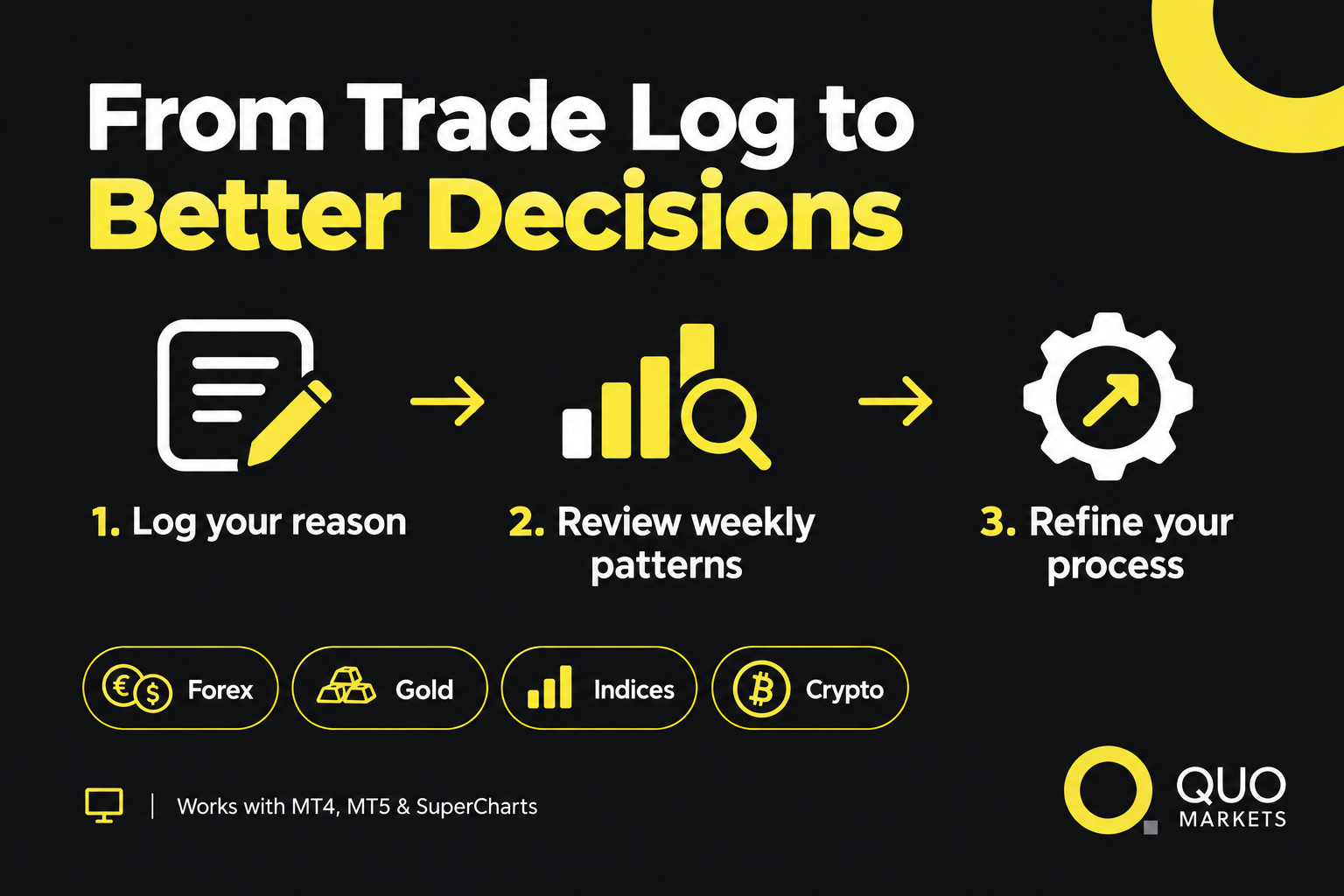
- Log why you entered every trade in one sentence.
- Review weekly, looking for patterns, not blame.
- When your volume or goals grow, upgrade to an automated platform.
A year of clean data is worth more than any indicator you’ll buy.
FAQs
Why do I need a trading journal?
It records what you did and why, so you can see what works and stop repeating what doesn’t.
What’s the best trading journal for beginners?
Most beginners do well starting with Google Sheets or a free tier, then moving to automated software once they need deeper analytics.
Can a journal really improve my results?
It can’t promise profits, but it highlights your strengths, weaknesses, and habits, which is the foundation of improvement.
Does a journal work with MT4 and MT5?
Many do, through direct sync or file import. Always confirm compatibility with your account type before you subscribe.
Can I use these tools with QuoMarkets?
Yes. Because QuoMarkets runs on MT4, MT5, and SuperCharts, you can connect or import your trades into most third-party journals.
Risk warning: Trading CFDs and leveraged products carries a high level of risk and may not be suitable for everyone. This article is for education only and is not financial advice.