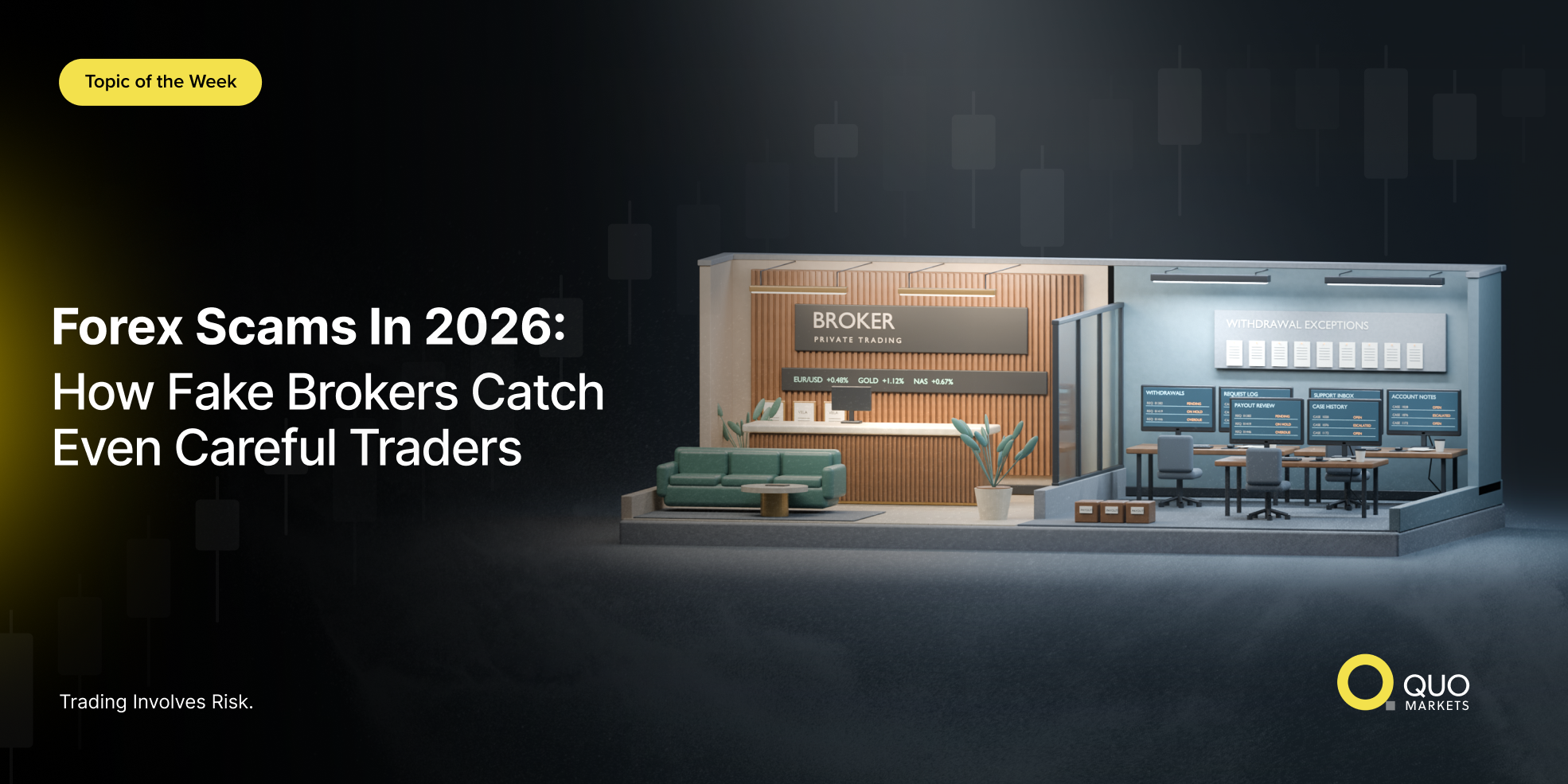
Forex Scams in 2026: How Fake Brokers Catch Even Careful Traders
You have probably seen the ad. A smiling trader, a rooftop view, a clean dashboard, and a promise of steady, “guaranteed” profits. A few years ago, ads like this were easy to laugh off because of the typos, the blurry logos, and the odd wording. That is no longer the case.
In 2026, a forex broker scam can look polished, sound professional, and feel completely trustworthy. Many people who fall for it are not beginners. They are experienced traders who simply did not expect the fraud to look this real. Here is how these schemes work today, and what you can do to stay one step ahead.
Key Takeaways
- Modern forex trading scams use AI-generated videos and slick fake platforms to look legitimate.
- A fake broker may show impressive profits on screen, then block your withdrawal when you try to cash out.
- Some forex frauds start with friendship or romance and build trust over weeks before asking for money.
- Guaranteed returns, pressure to deposit fast, and odd payment methods are classic warning signs.
- Always check a broker’s licence with the regulator yourself, and only trade with money you can afford to lose.
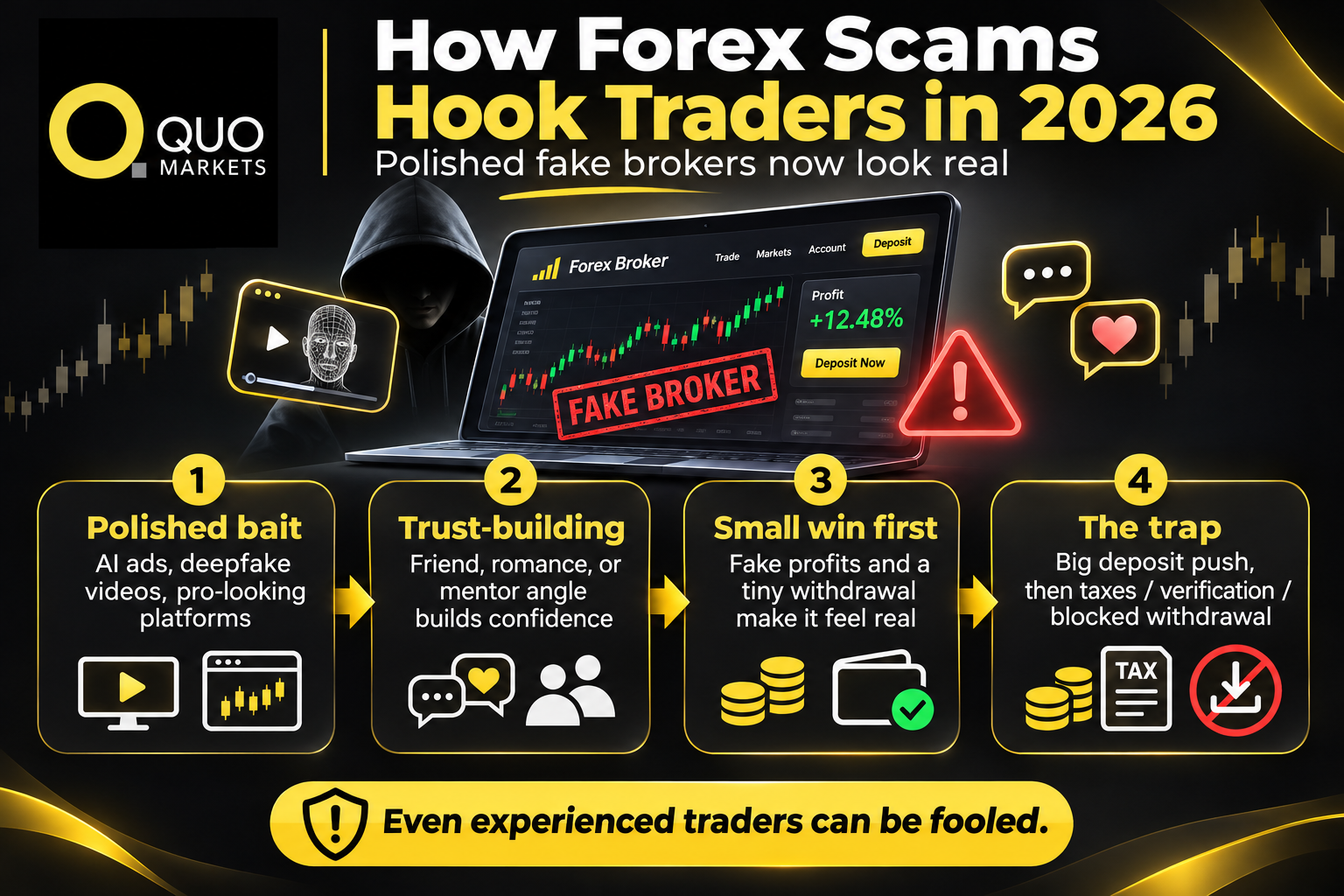
Fake Brokers Now Look Like the Real Thing
The most dangerous forex trading scam today is rarely just a cheap website. Fraudsters now build whole systems: a branded app, a live-looking price feed, a support chat, and even fake client dashboards. With AI tools, creating something that looks more refined than a real broker’s platform takes very little time.
The visuals are only part of it. Deepfake technology lets scammers produce videos of well-known finance personalities, or even people you personally know, recommending a particular platform. The voice, the facial expressions, and the speaking style can all be copied. When someone you respect seems to vouch for a platform, it is natural to lower your guard, especially if the post says spots are limited. That fear of missing out is exactly what the scammer is counting on.
How “Pig Butchering” Works
Some forex frauds are slow and personal. In a pig butchering scam, the fraudster takes weeks or even months to get close to you. They might pose as a new friend, a romantic partner, or a helpful mentor from an online trading group.
Once you trust them, they suggest a platform and encourage you to start small. Your balance grows quickly, and you may even withdraw a little money to prove the system is real. Then comes the push to invest much more, sometimes your savings. When you try to take the money out, new demands appear: a “tax payment,” a “compliance check,” or a “verification deposit.” None of it is real, and every payment simply goes to the scammer.
Signal Sellers and Trading Robots
Signal sellers are another common source of forex trading scams. They promise secret tips, insider access, or an AI system that beats the market. Trading robots are often sold the same way, with impressive backtests that nobody can verify.
Some of these offers also work like Ponzi or pyramid schemes. Early members get paid with money from newer members, and everything looks fine until new deposits dry up. At that point, the whole thing collapses, and the latest investors lose out.
Red Flags to Watch For
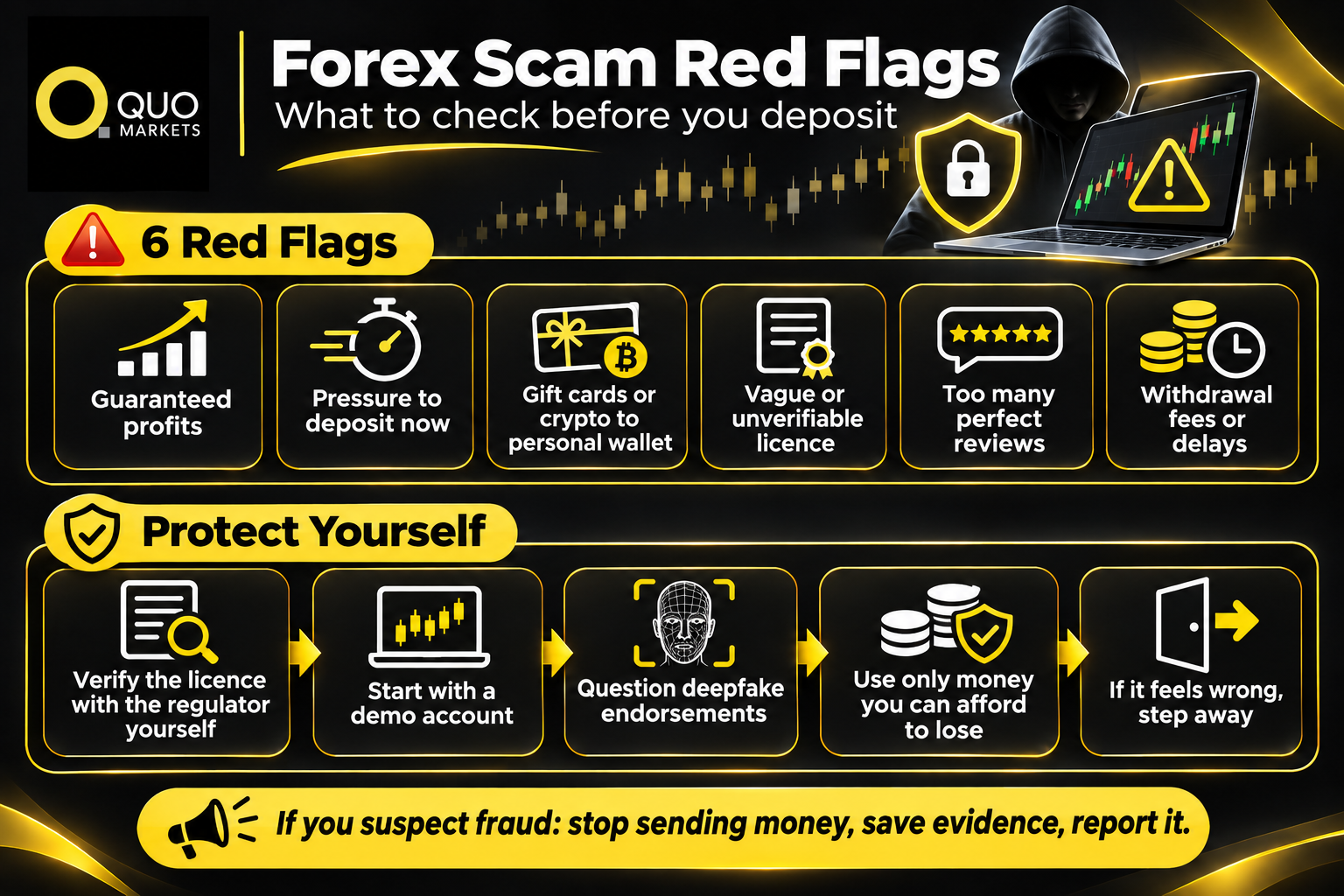
- Guaranteed profits. Real markets carry risk, and no honest broker can promise returns.
- Pressure to act now. Countdown timers and “last chance” offers are meant to stop you from thinking.
- Unusual payment methods. Be wary if you are asked to pay by gift card, crypto transfer to a personal wallet, or to a third-party account.
- Vague licensing. If the broker cannot show a clear licence number you can check, walk away.
- Too many glowing reviews. Fake testimonials are everywhere, so look for balanced, independent feedback.
- Withdrawal obstacles. New fees or delays just when you want your money out are a major warning sign.
How to Protect Yourself
Start with a demo account. It lets you test a platform’s behaviour without risking real money. Look up the broker on your country’s financial regulator website instead of trusting the badge on the broker’s homepage. Be careful with very high leverage, particularly when it is presented as a shortcut to easy money. And if a stranger online is suddenly interested in your trading, ask yourself why.
If something feels wrong, trust that feeling and step away.
What to Do If You Think You Have Been Scammed
Stop sending money right away, even if you are told it will unlock your funds. Try to withdraw whatever remains in your account. Save screenshots, chats, receipts, and transaction details. Then report the broker to your local financial regulator and consider speaking with a fraud recovery or legal specialist. Be cautious of anyone who contacts you offering to recover your money for an upfront fee, as that is often a second scam.
Final Remarks
In 2026, a forex broker scam can hide behind good design, convincing videos and friendly conversation. The basic rule has not changed, though: a legitimate broker will never guarantee profits, rush you into a deposit, or be vague about who regulates them. If an offer sounds too good to be true, take your time and check everything first.
FAQs
What are the most common forex trading scams in 2026?
The most common ones include fake brokers, rigged platforms, promises of guaranteed profit, deepfake endorsements, signal and robot schemes, and pressure to deposit money quickly.
Is high leverage a sign of a forex trading scam?
Not by itself. It becomes a warning sign when it is promoted as safe or effortless. A trustworthy broker will explain that leverage magnifies losses as well as gains.
Is forex trading itself a scam?
No. Forex is a real, global market where currencies are traded every day. The problem is that forex frauds copy the look of genuine opportunities to attract both new and experienced traders.
How can I check if a forex broker is legitimate?
Look for clear information about fees, risks and regulation. Then confirm the licence directly on the website of the relevant regulator, such as the CFTC and NFA in the US, the FCA in the UK, or the regulator in your own country. Do not rely on links or badges supplied by the broker.