
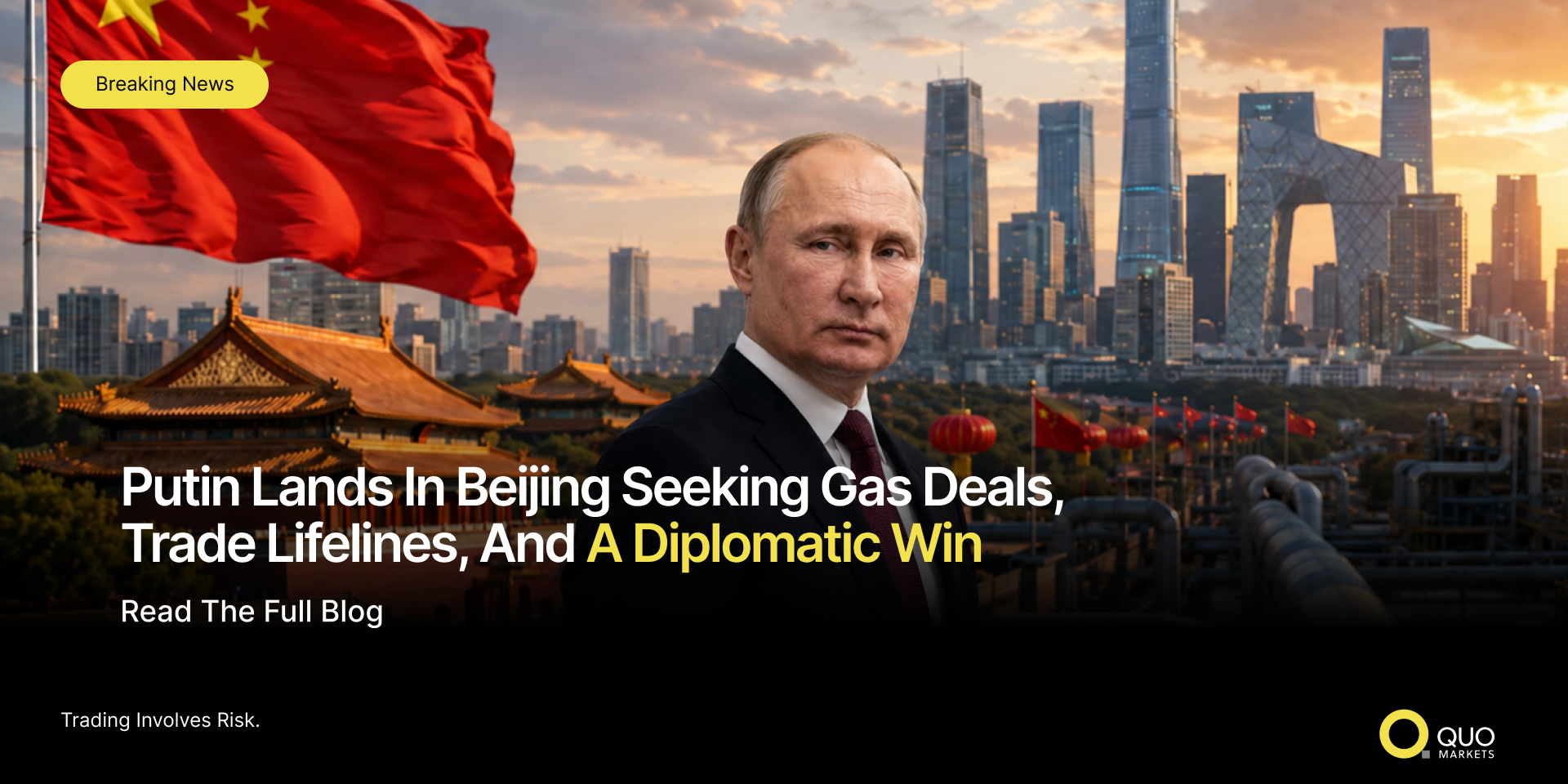
Putin Flies to Beijing With a Wish List, and China Holds All the Cards
Russia Needs This Trip Far More Than China Does
Vladimir Putin arrived in Beijing on Tuesday for a two-day summit with Xi Jinping, just days after Donald Trump wrapped up his own state visit to the Chinese capital. The timing is deliberate. For Russia, this meeting carries enormous weight.
What’s on the Table
Putin came with three clear priorities: a go-ahead for the Power of Siberia 2 gas pipeline (which would double Russian pipeline exports to China through Mongolia), stronger trade ties to fill the gap left by lost European markets, and China’s continued diplomatic cover on Ukraine, where Beijing has looked the other way without formally taking Russia’s side.
Russia-China trade has doubled over the past four years, with China now sitting where the EU used to be: Moscow’s top trading partner. Since 2022, Russia has grown deeply reliant on Beijing for technology, consumer goods, and manufactured products, and that reliance keeps growing.
Why Traders Should Pay Attention
The balance of power here is one-sided, and markets can see it clearly. China has been diversifying its energy sources and building up reserves, so it has no urgency around the pipeline. Beijing can afford to wait. Moscow cannot. If the Power of Siberia 2 deal gets pushed off again, it points to ongoing strain on Russian energy revenues, keeping the country’s finances stretched and its currency under pressure.
On the geopolitical side, any shift in China’s position on Ukraine, in either direction, would move through commodity and foreign exchange markets fast.
What to Watch Next
Three things could move markets before Putin’s plane leaves Beijing.
First, the pipeline. A green light on Power of Siberia 2 would be a genuine win for Moscow, but China has delayed this decision before, and there’s no real pressure on Beijing to rush it now.
Second, the Ukraine language. Joint statements from these summits are carefully worded, and even a subtle shift in how China frames the conflict would send a signal to markets.
Third, and most awkward. Reports surfaced that Xi privately told Trump that Putin may come to regret the invasion. China’s foreign ministry called it pure fiction, but that denial alone keeps the story alive. Whether that tension shows up in body language, a shorter-than-expected joint statement, or simply in what goes unsaid, it’s worth watching closely.
Stay ahead of every market-moving headline with QuoMarkets.