
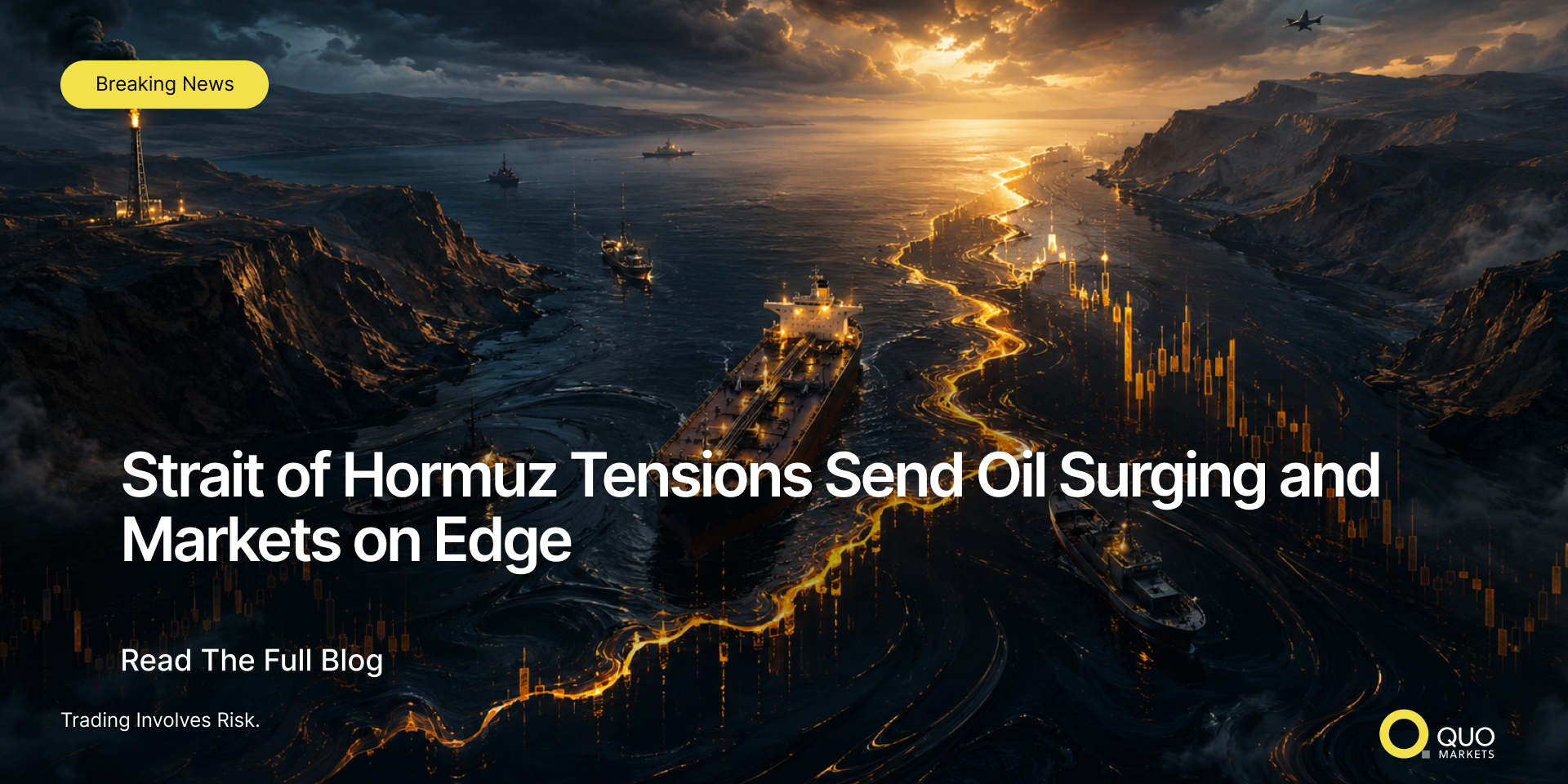
Fresh clashes between Iran and the U.S. in the Gulf are rattling traders just as earnings season and rate speculation heat up.
Markets opened the week on shaky ground after Iran and the United States exchanged attacks in the Gulf, with Tehran claiming it had shut the Strait of Hormuz. President Trump pushed back, insisting the strait remained open, and U.S. officials said 20 ships were escorted through in the past 24 hours.
A Waterway Under Watch
Still, the numbers tell a different story. Transits had already dropped to just 10 by Friday, according to UKMTO, and ship trackers showed no vessels crossing the strait’s narrowest point on Monday, at least none broadcasting their location.
Oil, Yields, and Stocks React
That uncertainty alone was enough to move markets. Brent and U.S. crude jumped nearly 4%, the dollar strengthened broadly, and 10-year yields ticked up 2 basis points. Asian stocks slid, led by the Nikkei, while European futures fell around 0.6%.
Nasdaq futures dropped 0.6% too, with investors already nervous about whether AI and chip stocks can live up to their sky-high valuations. BofA flagged that hyperscalers have poured $234 billion into AI spending this year, a pace that could push free cash flow negative for the first time since 2007.
Why Traders Should Care
This is a story about risk piling up from multiple directions at once: a geopolitical flashpoint threatening oil supply, a Fed under pressure to raise rates, and an earnings season that needs to deliver on inflated expectations.
Watch Tuesday’s inflation data and Fed Chair Kevin Warsh’s first Congressional testimony, both could set the tone for the rest of the week.
Stay ahead of every market-moving headline with QuoMarkets.
Source: Reuters