
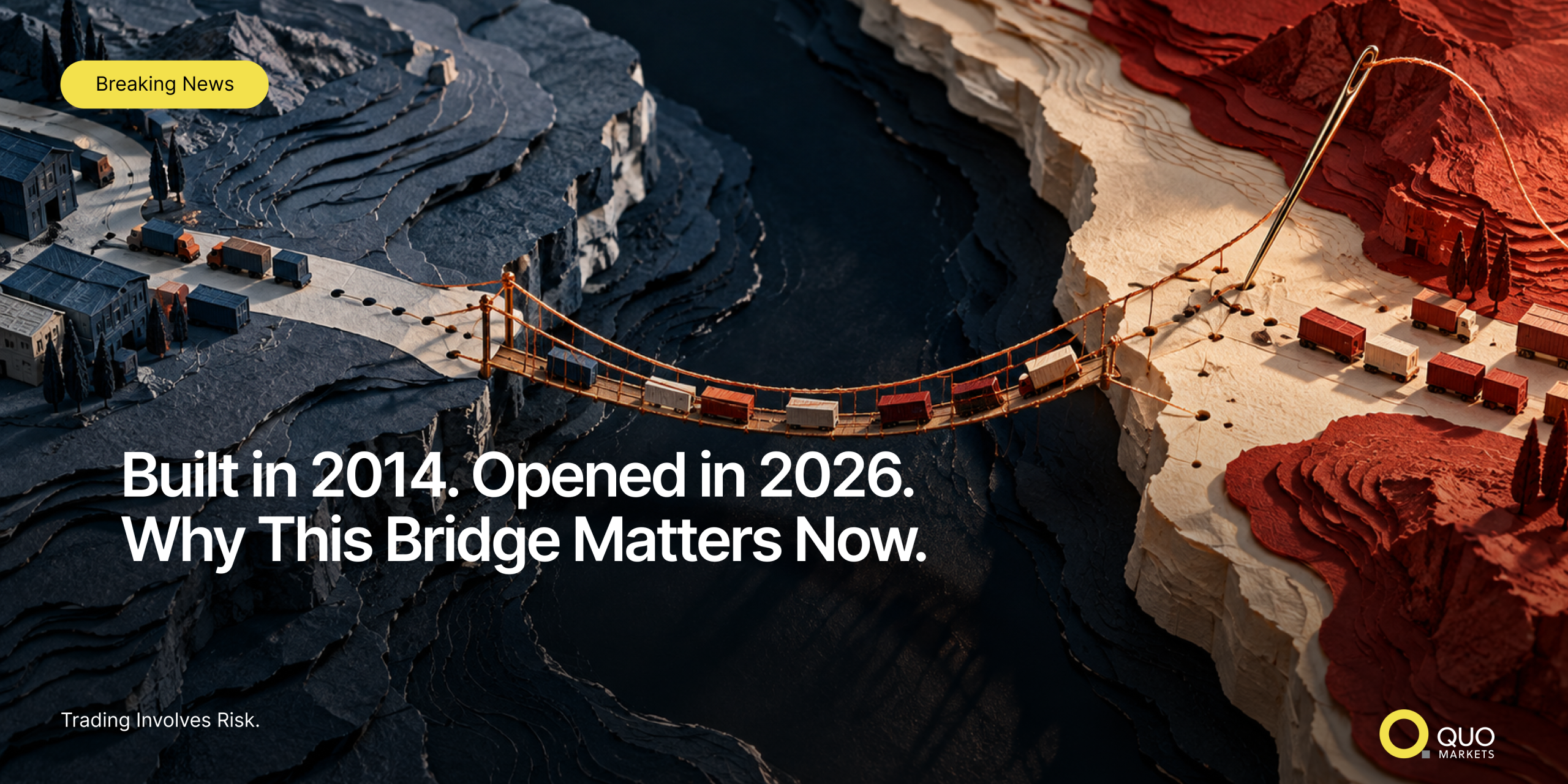
Built in 2014. Opened in 2026. Why This Bridge Matters Now.
At a Glance
- The New Yalu River Bridge officially opened Thursday, 12 years after it was completed
- China’s exports to North Korea rose 25% to $2.3 billion last year, a six-year high
- An analyst expects no immediate return to pre-sanctions trade levels
- The bridge should help move heavy equipment, raw materials and energy products
A long-idle bridge between Beijing and Pyongyang is now open for business, and it signals warmer ties after years of tension.
Completed in 2014, the bridge sat unused until now. China and North Korea held an opening ceremony on Thursday, hoping to restart trade after years of strained relations and pandemic disruption.
Key Details
The cable-stayed bridge runs 3 km (2 miles), with a 1.3-km crossing on the Chinese customs side. Over the past few days, trucks lined up on the bridge, and crowds gathered on the Chinese side to watch. Approach roads and the customs compound on the North Korean end are still unfinished.
Chinese state news agency Xinhua reported the ceremony. North Korean state media have not yet covered it. The leaders of both countries have met twice in the past year.
China remains Pyongyang’s largest trading partner, even though UN sanctions ban the flow of goods and workers over North Korea’s missile and nuclear programs. Last year’s $2.3 billion in Chinese exports is still well below the levels seen before sanctions tightened in 2017.
Why It Matters
Lim Eul-chul of Kyungnam University’s Institute for Far Eastern Studies says the bridge is unlikely to bring an instant return to full pre-sanctions trade. It will, however, help carry the heavy equipment, raw materials, and energy products North Korea needs for its development projects. Analysts also note that Pyongyang is wary of leaning too hard on Beijing.
Watch for North Korean state media coverage, progress on the unfinished customs area, and whether trade volumes keep climbing.
Stay ahead of every market-moving headline with QuoMarkets.
Source: Reuters