
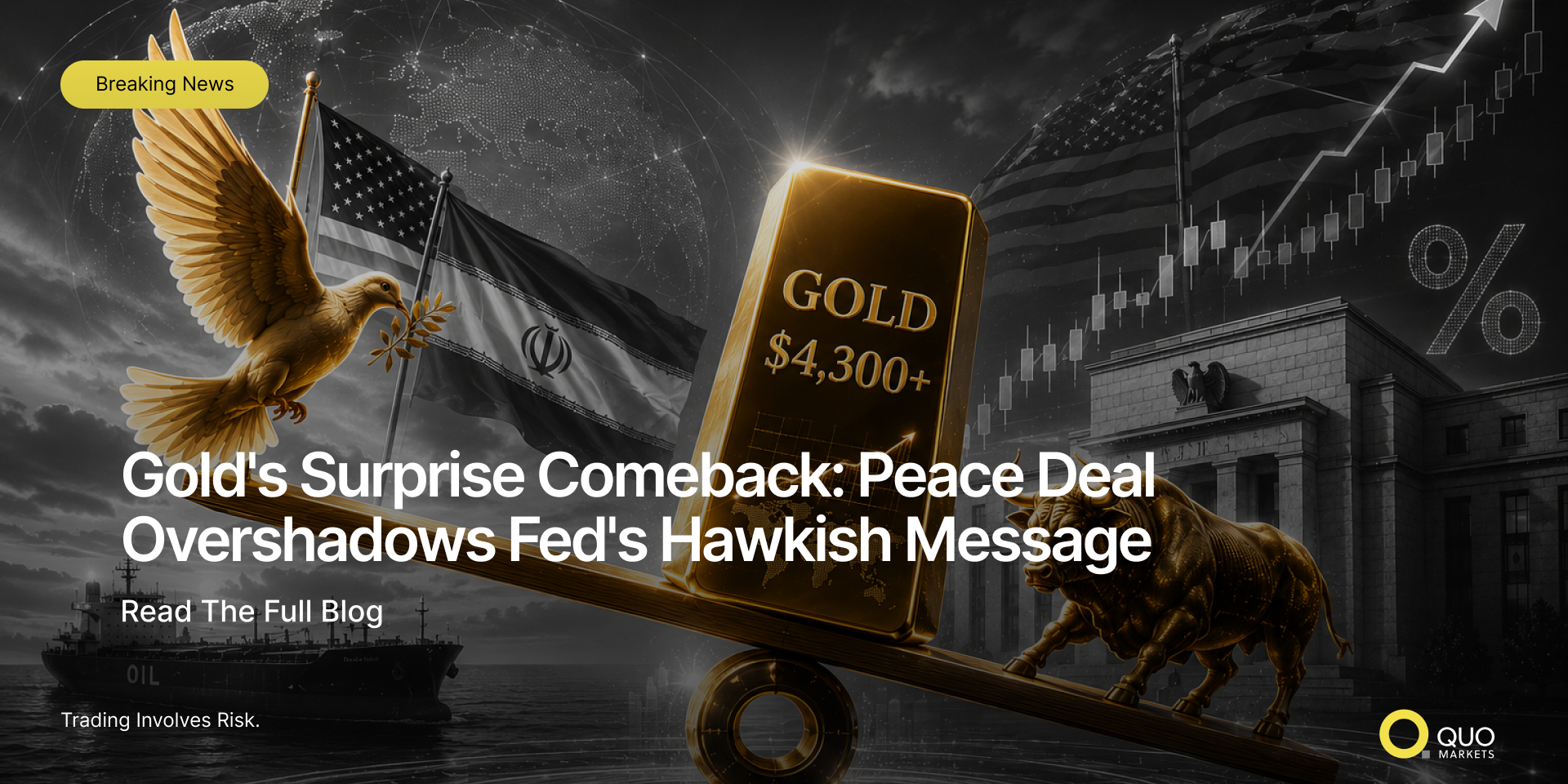
A landmark agreement between Washington and Tehran lifted gold prices, while traders weighed the Federal Reserve’s latest warning that interest rates could still move higher this year.
Gold surged on Thursday after the United States and Iran signed an interim peace agreement, a development that eased concerns about disruptions to global energy supplies. The rally came even as the Federal Reserve maintained a cautious stance on inflation and kept the door open to future rate hikes.
Key Details
Spot gold climbed as much as 1.7% to reach $4,328 per ounce, bouncing back from losses recorded during the previous session. By 9:21 a.m. Singapore time, the metal was trading at $4,322.83, up 1.6% on the day.
The agreement, signed electronically on Wednesday evening, marked a significant step toward reducing tensions in the Middle East. However, questions remained about the status of the Strait of Hormuz, a vital shipping route for global oil supplies.
Investors welcomed the deal as a sign that pressure on energy markets could ease. Lower risks of supply disruptions helped push oil prices down, reducing fears that rising energy costs could fuel another wave of inflation.
At the same time, the Federal Reserve left interest rates unchanged but reiterated that inflation remains a concern. Markets are now fully pricing in a rate increase by October, a scenario that typically creates headwinds for gold because the metal does not generate yield.
Still, analysts noted that expectations for tighter monetary policy had already been largely reflected in market pricing before the Fed’s latest announcement, limiting the immediate impact on precious metals.
Market Reaction
- Gold: +1.6% to $4,322.83 per ounce
- Silver: +2.5% to $69.61 per ounce
- Platinum: Higher
- Palladium: Higher
- US Dollar Index: -0.2%
- Oil: Moved lower following news of the US-Iran agreement
Why It Matters
Gold traders are navigating two competing forces. On one side, easing geopolitical tensions typically reduces demand for safe-haven assets. On the other hand, uncertainty over inflation and the prospect of higher US interest rates continue to shape investor sentiment.
For now, the market appears focused on the broader implications of the US-Iran agreement and whether it can deliver lasting stability to energy markets. Investors will also be watching developments around the Strait of Hormuz and upcoming US economic data, both of which could influence the Federal Reserve’s next policy decision.
Any surprise shift in inflation expectations or interest-rate forecasts could trigger the next major move in gold prices.
Stay ahead of every market-moving headline with QuoMarkets.