The Dollar Dips as Iran Deal Hopes Take the Heat Out of Oil
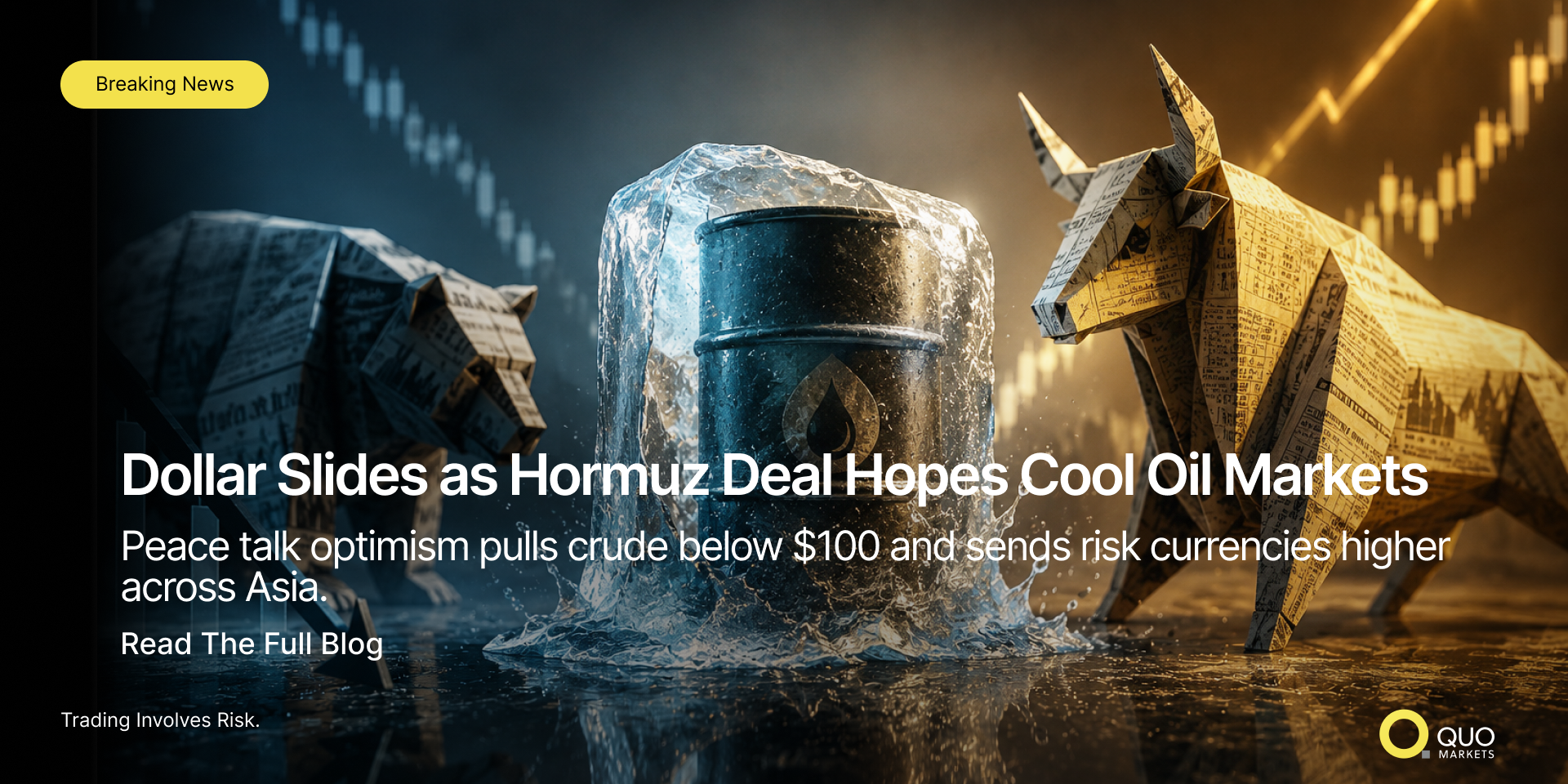
Optimism around U.S.-Iran talks pushed crude below $100 and gave Asian risk currencies room to breathe.
The U.S. dollar had a quiet but telling Monday morning across Asian markets. Word that Washington and Tehran might be closing in on a deal over the Strait of Hormuz was enough to send oil tumbling, and that shift in mood rippled straight into currency markets.
Here’s What Moved
The dollar index slipped 0.1% to 98.95, its softest level since May 18. Against the yen, it gave up 0.2%, landing at 158.9.
On the other side of those trades, the euro picked up 0.3% to $1.1636, sterling climbed 0.3% to $1.3476, the Australian dollar gained 0.5% to $0.7162, and the kiwi added 0.4% to $0.5869.
Worth noting: many global markets were closed for public holidays, so thinner-than-usual trading conditions made these moves hit a little harder than they otherwise might have.
Oil Stole the Show
The real action was in crude. Brent dropped 5.4% to $97.91 a barrel, and WTI fell 5.7% to $91.10 – both sliding under the $100 mark for the first time in a while, driven entirely by hopes of a ceasefire agreement.
Crypto was mostly quiet by comparison. Bitcoin edged up 0.5% to $76,961, while Ether barely moved, sitting at $2,091.
What Started All This
Over the weekend, Trump posted on social media that a peace memorandum with Iran was “largely negotiated,” with both sides, along with Pakistani mediators, describing the talks as making real progress.
By Sunday, though, he pulled back. The U.S. blockade on Iranian ships in the Strait, he said, would “remain in full force and effect until an agreement is reached, certified, and signed.” Iran stayed quiet and offered no immediate response.
Why Traders Are Watching Hormuz So Closely
The Strait of Hormuz is the passage for roughly 20% of the world’s oil supply. When there’s any serious movement toward a deal there, energy prices, currencies, and overall market sentiment all react, and they react fast.
What Comes Next
A formal statement from Tehran, or better yet, a signed agreement, would be the signal that really matters. Until that happens, markets will likely stay cautiously hopeful but ready to swing on every new headline.
Stay ahead of every market-moving headline with QuoMarkets.