
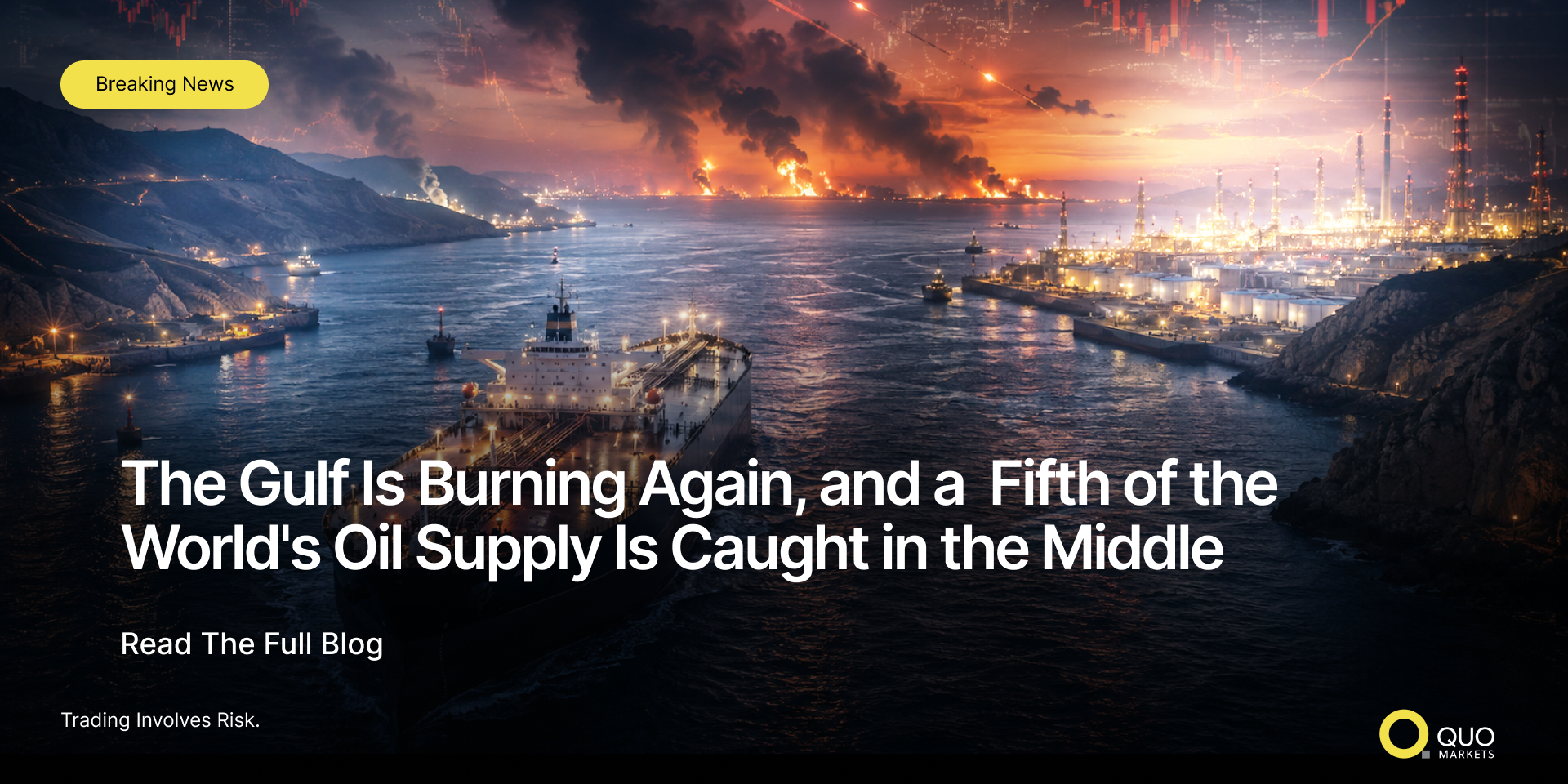
The Gulf Is Burning Again, and a Fifth of the World’s Oil Supply Is Caught in the Middle
Kuwait airport is hit, oil surges, and the ceasefire is hanging by a thread.
Gulf tensions exploded on Wednesday as Iran launched drone and missile strikes on Kuwait, damaging its international airport and injuring over 60 people. The U.S. responded with strikes on Qeshm Island near the Strait of Hormuz. Diplomacy, for now, appears stalled.
KEY DETAILS
Iran struck Kuwait’s airport and diplomatic facilities, killing one person and suspending flights. Kuwait Airways later resumed limited operations from Terminal 4. Bahrain intercepted three missiles and several drones after Iran claimed to have targeted the U.S. Fifth Fleet headquarters there. The U.S. military confirmed it downed drones threatening civilian ships and American forces, while intercepting two Iranian missiles that fell short over Kuwait.
MARKET REACTION
Oil jumped more than 2% as the Strait of Hormuz, responsible for roughly one-fifth of global oil and LNG shipments before the conflict began, remains largely closed. Markets are watching every headline.
WHY IT MATTERS
This conflict started on February 28. A ceasefire was reached in early April, but it keeps fracturing. Last week, both sides signaled progress toward a preliminary deal to halt fighting and reopen the strait, but nothing is signed. Iran says talks are paused until its conditions on Lebanon are met. Trump says negotiations are ongoing and that Iran has already agreed not to pursue nuclear weapons. Tehran hasn’t confirmed that publicly.
Meanwhile, Israel continues strikes in Lebanon, killing at least six people on Wednesday – the closest attack to Beirut since a U.S.-brokered partial ceasefire was announced Monday.
WHAT TO WATCH
Whether a preliminary U.S.-Iran agreement materializes and whether the Strait of Hormuz reopens will drive energy markets in the days ahead.
Stay ahead of every market-moving headline with QuoMarkets.