
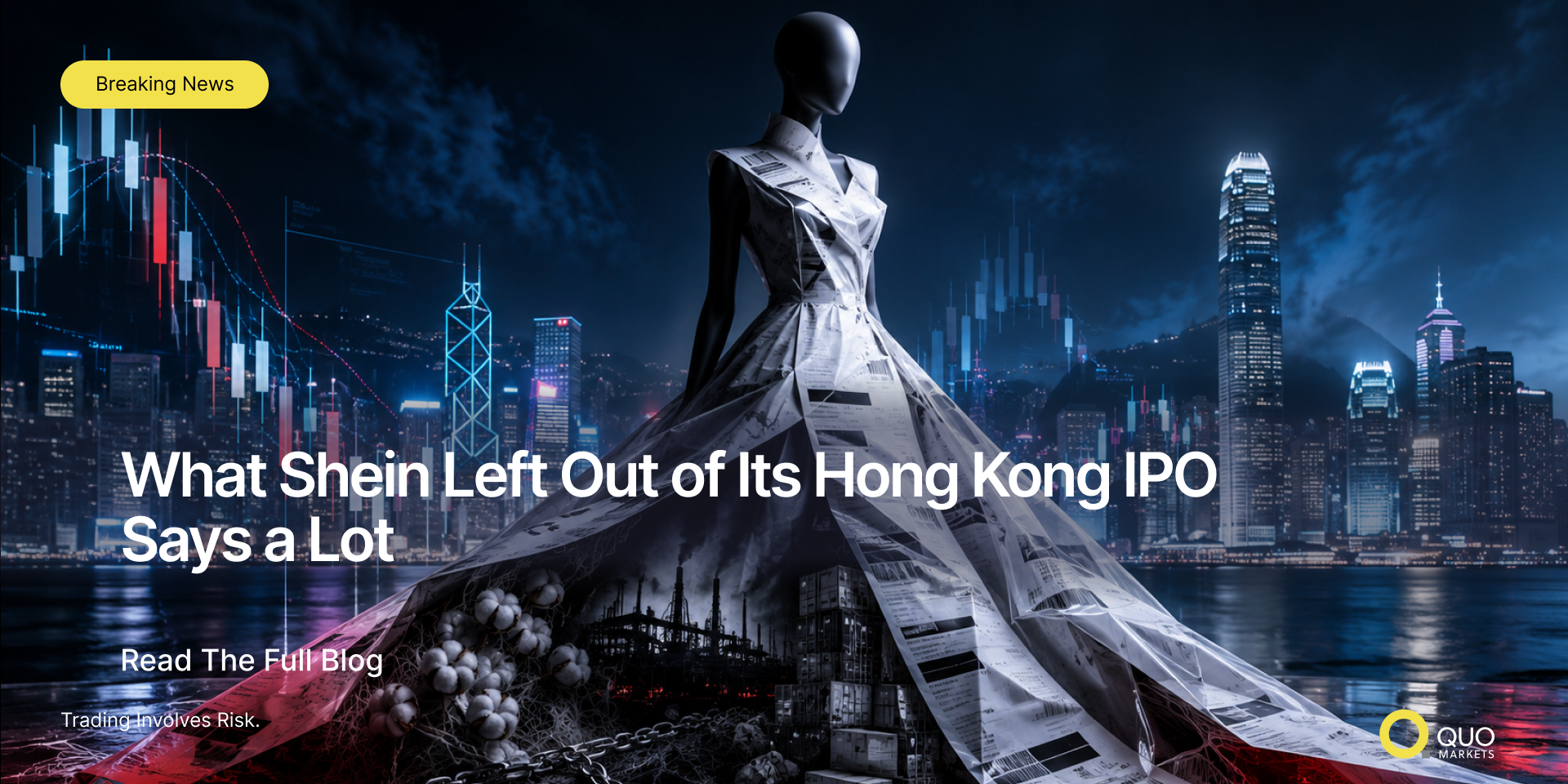
The fast-fashion giant kept its filing vague on forced labour risks, and traders should pay attention to why.
Shein has filed for its Hong Kong IPO, and the paperwork is notably quiet on one of the company’s biggest controversies: allegations tied to Xinjiang cotton and Uyghur forced labour. The filing, published Sunday, sticks to broad language about “reputational risk” instead of naming the issue directly.
Key Details
According to a source close to the matter, Shein’s earlier attempts to list in New York and London stalled once its risk disclosures referenced the Uyghur Forced Labor Prevention Act. China’s regulator wouldn’t sign off on language like that. London’s FCA actually approved the filing, but the China Securities Regulatory Commission held it up, pushing Shein toward Hong Kong instead.
This time, the disclosure simply warns that negative publicity around its brand or partners “may reduce the value and attractiveness” of its products and brand. The filing leans instead on Shein’s operational strengths – its network of 7,500 contract manufacturers and its LATR system, which keeps inventory lean through automated testing and reordering.
Why It Matters
Shein makes almost everything in China but sells almost nothing there, leaving it stuck managing two very different regulatory audiences. Hong Kong offers a workaround: access to global capital while staying inside Beijing’s comfort zone. As King’s College London researcher Lerong Lu put it, Chinese companies listing in the West tend to draw more political heat, while Hong Kong reads as the safer bet.
What to Watch
Investors will be watching whether Hong Kong regulators wave this filing through, and whether Western scrutiny over supply chain transparency follows Shein even after it lists.
Stay ahead of every market-moving headline with QuoMarkets.
Source: REUTERS