
Table of Contents
- MT5 vs MT4: Trading Purpose and Supported Assets
- Main Feature Differences Between MT4 and MT5
- Order Types, Hedging, and Netting Explained
- Broker Compatibility and Platform Support
- Which Platform Should You Use?
- Final Remarks
- FAQs
MT5 vs MT4: Which Trading Platform Fits Your Trading Style Better?
When traders discuss forex and CFD platforms, two names almost always come up first: MetaTrader 4 and MetaTrader 5. Both platforms were developed by MetaQuotes Software, and both have built strong reputations over the years.
If you’ve ever wondered about the real difference between MT4 and MT5, you’re definitely not the only one. Every day, traders face the same decision when opening a new trading account or moving to a different broker. The truth is simple: there is no single “best” platform for everyone. The right choice depends on the markets you trade, your trading style, and the tools your strategy requires.
This MT4 vs MT5 comparison breaks down the key differences so you can decide which platform works best for you.
MT5 vs MT4: Trading Purpose and Supported Assets
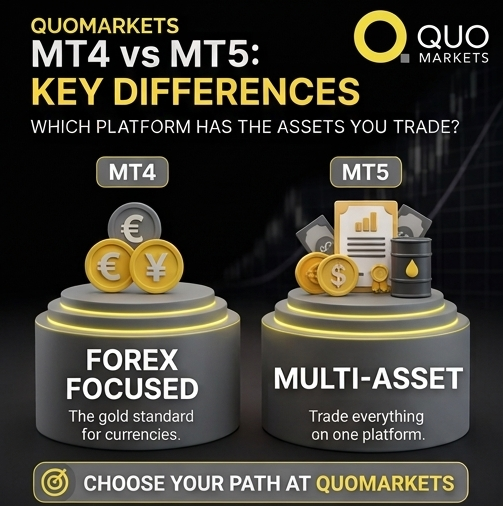
MetaTrader 4 launched in 2005 and quickly became the benchmark platform for retail forex trading. It was created specifically for currency trading, and that focused approach helped it gain enormous popularity. Brokers adopted it rapidly, traders became comfortable with it, and a huge ecosystem of Expert Advisors, indicators, and scripts developed around the platform.
MetaTrader 5 arrived in 2010 with a much broader goal. Instead of concentrating only on forex, MetaQuotes designed MT5 as a multi-asset platform capable of supporting forex, stocks, commodities, futures, and exchange-traded products. That difference becomes important once traders begin expanding beyond currency pairs.
If forex trading is your only priority, MT4 already delivers everything most traders need. It’s lightweight, fast, and extremely familiar across the industry. Many brokers and support teams still know the platform inside out.
However, if you want to trade stocks together with forex positions, or explore futures and other markets, MT5 is built to handle that wider range of assets more effectively.
It’s also important to understand that MT5 is not simply a newer version of MT4. The two platforms were built on different codebases, which means Expert Advisors created for MT4 cannot run directly on MT5 without adjustments. For traders who have spent years building custom MT4 tools, this matters a lot. For beginners starting from scratch, it’s usually less of an issue.
In simple terms, MT4 remains highly effective for forex and CFD trading, while MT5 is designed for traders who want broader market access and more advanced infrastructure.
Main Feature Differences Between MT4 and MT5
Let’s explore the feature gap between these platforms briefly:
Timeframes
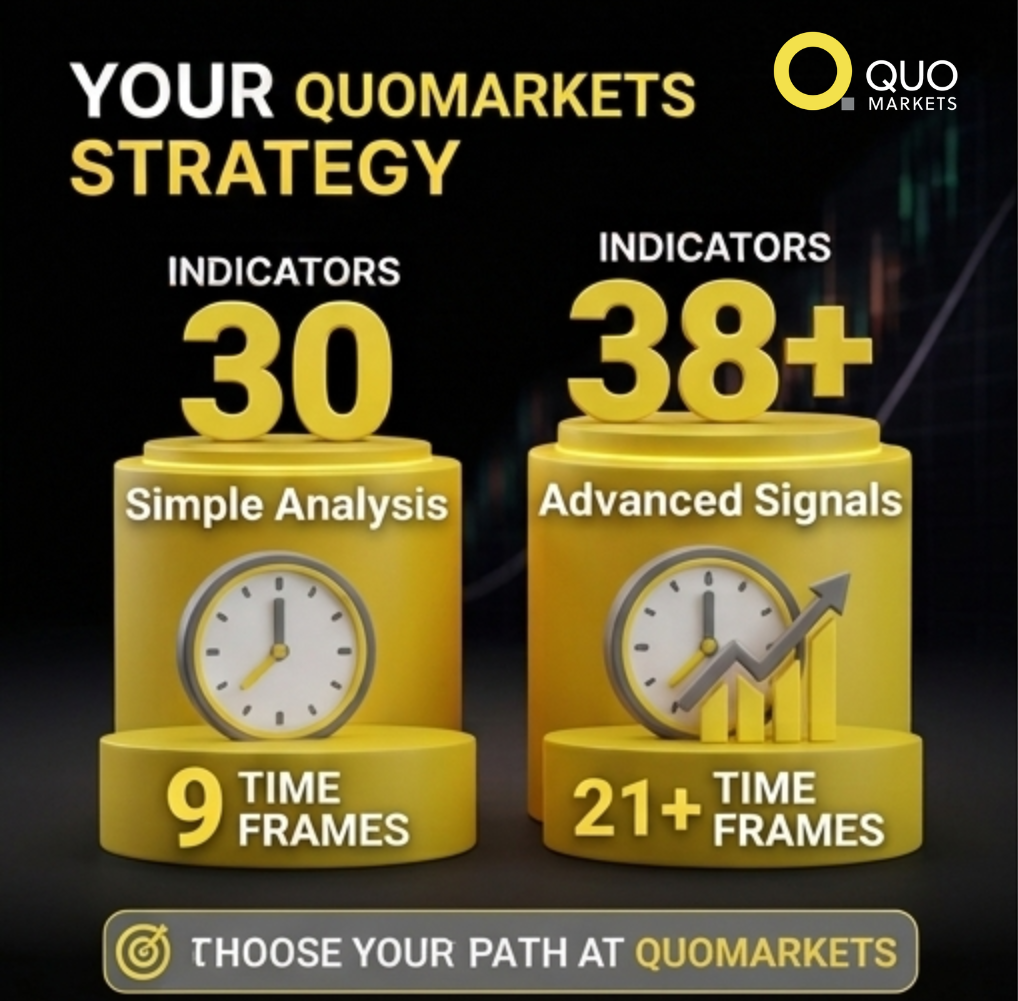
MT4 provides 9 chart timeframes, covering periods from one minute up to one month. MT5 expands this to 21 timeframes, offering traders much more flexibility for technical analysis. Traders who rely heavily on detailed chart analysis often appreciate the extra timeframe choices available in MT5.
Technical Indicators
MT4 includes 30 built-in technical indicators. MT5 increases the number to 38 and also adds more graphical tools for chart analysis. Both platforms support custom indicators, but MT5 offers a richer set of tools immediately after installation.
Economic Calendar
One of MT5’s most practical upgrades is its built-in economic calendar. Traders can monitor major market events directly inside the platform without needing additional websites or browser tabs.
MT4 does not include this feature by default, so traders usually depend on external tools to track economic news and announcements.
Depth of Market
MT5 includes a native Depth of Market feature, also known as DOM or order book visibility. This allows traders to see buy and sell orders across different price levels, helping them better understand short-term market activity and liquidity.
MT4 does not include a built-in Depth of Market feature, which can be limiting for traders who rely on volume analysis.
Strategy Tester
For algorithmic trading, MT5 introduces major improvements. Its strategy tester supports multi-threaded optimization and multi-currency testing, allowing traders to backtest strategies across several symbols at the same time.
MT4’s strategy tester works on a single thread and only tests one instrument at a time. For traders focused on automated systems, this difference can be extremely important.
Programming Language
MT4 uses MQL4, while MT5 runs on MQL5. MQL5 is more advanced and offers greater flexibility for building sophisticated trading systems and tools.
At the same time, MQL4 still benefits from a larger community library because it has existed much longer and has accumulated years of shared resources.
Order Types, Hedging, and Netting Explained
One of the most misunderstood differences between the two platforms involves how they handle positions and order management.
MT4 uses a hedging system by default. This means traders can open both buy and sell positions on the same instrument simultaneously. For example, you can hold both a long and short position on EUR/USD at the same time. Many forex traders still prefer this flexibility because their risk management strategies were built around it.
When MT5 first launched, it was based on a netting system. Under netting, positions on the same instrument are merged into one combined position. If you buy and then sell the same lot size, the trade closes rather than maintaining two separate positions.
Later, MetaQuotes introduced hedging account support for MT5 as well. Today, many brokers offer MT5 accounts with hedging enabled, although this depends entirely on the broker’s setup. Traders should always confirm account details before switching platforms.
MT5 also improves order functionality overall. It supports six pending order types compared to MT4’s four. The additional Buy Stop Limit and Sell Stop Limit orders give traders more precise entry control. Another advantage is native partial position closing, which helps traders manage trade sizes more efficiently while positions are running.
If your strategy depends heavily on simultaneous opposite positions, confirming hedging support on an MT5 account is essential before making the move.
Broker Compatibility and Platform Support

MT4 still remains the most widely supported platform among forex brokers worldwide. Its long presence in the market helped build a massive infrastructure around it, including broker integrations, liquidity systems, support teams, and third-party tools.
When traders open an MT4 account, they’re using a platform that almost every broker understands thoroughly.
At the same time, MT5 adoption has continued growing steadily. Many brokers now provide both platforms side by side. Regulatory developments have also encouraged some brokers to move toward systems with stronger reporting capabilities, where MT5 offers certain advantages.
Still, traders should remember that simply choosing MT5 does not automatically provide access to every asset class. Some brokers only offer forex and CFDs on MT5 despite the platform’s broader capabilities.
If your goal is true multi-asset trading, it’s important to confirm exactly which instruments your broker supports on MT5 before opening an account.
QuoMarkets supports both MT4 and MT5, allowing traders to choose the platform that best matches their trading style and experience.
Which Platform Should You Use?
The right platform depends on three main factors: what you trade, how you trade, and whether your current tools are already tied to one ecosystem.
Choose MT4 if:
- You mainly trade forex and CFDs
- Your strategy depends heavily on hedging
- Your broker does not offer MT5 hedging accounts
- You already use Expert Advisors built into MQL4
- You prefer a simpler interface with a massive support community
Choose MT5 if:
- You want access to stocks, commodities, or futures alongside forex
- You value tools like Depth of Market and built-in economic calendars
- You need additional chart timeframes
- You’re creating new automated systems using MQL5
- You’re starting fresh without older MT4 tools
For beginners, both platforms are fairly easy to learn. However, MT4 often feels simpler for traders focused entirely on forex because there are countless tutorials, forums, and broker resources available online.
MT5 is equally accessible, though its wider range of features may feel slightly more complex before traders settle into a specific trading approach.
Regulations may also affect your decision in some regions, especially regarding hedging availability. That’s why checking account conditions directly with your broker always matters.
Final Remarks
The MT4 vs MT5 debate has no universal winner, and that’s actually a good thing. MetaTrader 4 remains one of the most trusted forex trading platforms ever created, backed by enormous broker support and a long-established trading community.
MetaTrader 5 delivers a more advanced environment for traders who want broader market access, deeper analytics, and stronger order management capabilities.
Understanding the difference between MT4 and MT5 allows traders to choose based on their real trading goals instead of industry hype.
FAQs
Is MT5 better than MT4?
MT5 includes more advanced features and broader market support, but the better platform depends on your trading needs. MT4 still works extremely well for forex traders who rely on hedging strategies and existing MQL4 tools.
Can MT4 accounts be used on MT5?
No. MT4 and MT5 are separate platforms that require different account types. Traders need dedicated accounts for each platform.
Should beginners start with MT4 or MT5?
Beginners who plan to focus mainly on forex often find MT4 easier because of its large educational community and broker support. MT5 is also beginner-friendly but includes more advanced features that may take additional time to explore.
Why do brokers provide both MT4 and MT5?
Different traders need different tools. MT4 continues to serve a massive global forex audience, while MT5 appeals to traders looking for multi-asset access and expanded platform functionality. Offering both platforms helps brokers support a wider range of trading styles and experience levels.
What is the difference between MT4 and MT5?
MT4 focuses mainly on forex trading and supports hedging by default. MT5 is a multi-asset platform with additional timeframes, more order types, a built-in economic calendar, and Depth of Market functionality. Since the platforms use different codebases, Expert Advisors and indicators are not directly compatible between them.