

How Much Capital Do You Really Need to Start Day Trading?
Before stepping into the world of day trading, nearly every beginner asks the same question: how much money is actually required to get started? The answer is not as straightforward as naming a single amount. The capital you need depends on multiple factors, including the market you choose, your broker’s margin requirements, and your own tolerance for risk.
Day trading is a fast-moving style of investing where traders buy and sell financial instruments within the same trading day in an attempt to profit from small price changes. Since day trading activities focus heavily on short-term market movements and rapid fluctuations, managing capital properly becomes critical from the start.
Understanding how much capital is needed can help traders avoid common mistakes such as overleveraging, facing margin calls, or taking on financial risks they cannot afford. Many retail traders enter the markets believing fast profits come easily. In reality, experienced traders know that proper capital planning is one of the most important parts of any investment strategy before placing a single trade.

Minimum Regulatory Requirements for Day Traders
Certain financial markets have official minimum balance rules for active traders. The best-known example applies to stock trading in the United States.
Under rules established by the Financial Industry Regulatory Authority, anyone who places four or more day trades within five business days using a margin account may be labeled a pattern day trader. Once classified as a pattern day trader, the account must maintain at least twenty-five thousand dollars in equity. This rule applies on every trading day when day trading activity takes place.
If the account balance falls below the required minimum, the trader cannot continue day trading until the account is brought back above the threshold. In practice, this usually means depositing additional funds into the brokerage account or reducing open positions.
The pattern day trader rule was designed to reduce excessive risk among inexperienced beginner traders who may not fully understand how dangerous rapid trading can become. Regulators recognized that short-term price volatility can lead to losing money very quickly, especially when traders rely heavily on borrowed funds and leverage.
Cash accounts also come with limitations. In most cases, day trading is not allowed in a cash account because securities must be fully settled before they can be sold again. Since day trading involves buying and selling securities within the same trading day, traders typically need a margin account to operate efficiently.
Other markets have lower barriers to entry. Forex trading, contracts for difference, and some derivatives markets often allow traders to begin with smaller trading accounts because brokers provide higher leverage. However, easier access does not reduce the risks. In many situations, leverage actually increases the possibility of substantial losses.
Understanding these regulatory requirements is one of the first steps before entering the stock market or participating in other financial markets.
The Role of Leverage and Margin in Day Trading
Leverage is one of the core features of day trading, but it is also one of the most misunderstood concepts. When traders use leverage, they are essentially borrowing funds from their broker to control a larger position than their account balance would normally allow.
Inside a margin account, brokers provide day trade buying power based on the trader’s available maintenance margin excess. For instance, a trader holding thirty thousand dollars in a pattern day trader account may gain access to a much larger position size during the same trading session.
This increased buying power can amplify profits if the stock price moves in the trader’s favor. But the reverse is equally true. If the market moves against the position, losses can grow very quickly.
When traders exceed their day trade margin limits or fall below the required maintenance margin, brokers may issue a day trade margin call. The trader then has five business days to deposit additional funds and restore the required balance. If the margin call is not met, the broker may restrict future trading activities or even liquidate positions automatically.
Because short-term trends can reverse suddenly, leveraged trades involve far more risk than long-term investing, which usually focuses on the underlying value of an asset over time.
Transaction costs are another factor traders often overlook. Frequent opening and closing positions within the same trading day means paying commissions, spreads, and trading platform fees repeatedly. Over time, these costs can slowly eat into profits.
Competition in the market is also intense. Many professional day traders work for large financial institutions equipped with sophisticated trading systems, advanced analytics, and real-time market data. The growth of algorithmic trading and high-frequency trading has made the environment even more challenging for individual retail traders.
That is why anyone considering day trading should fully understand how leverage operates and how quickly a losing trade can turn into a serious margin issue.
How to Decide the Right Trading Capital for You
Beyond regulatory rules, traders also need to determine how much capital makes sense for their own financial situation. This decision mainly comes down to risk management.
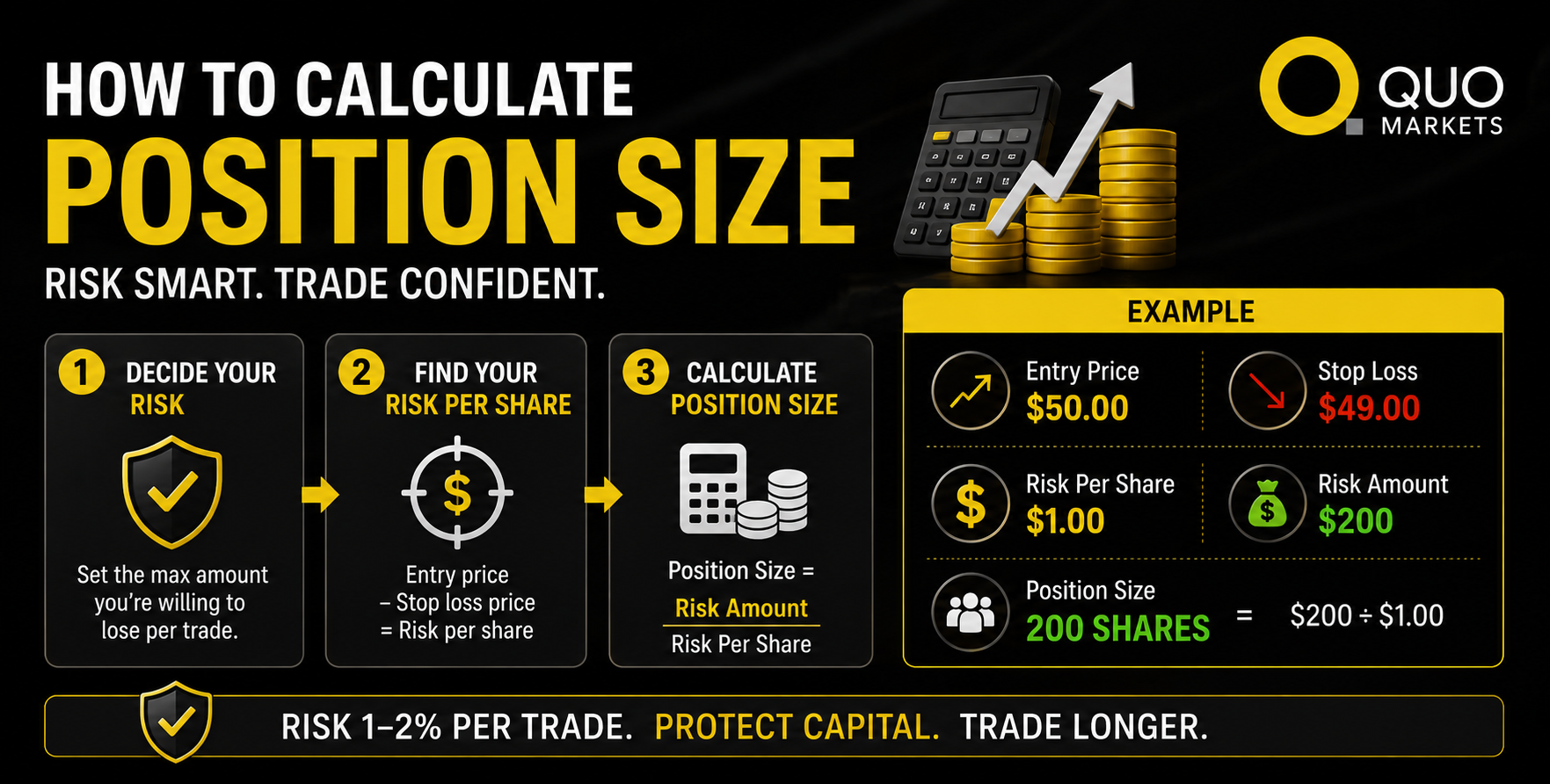
Many experienced traders follow a simple principle: risk only one to two percent of the total trading account on a single trade. This method helps protect the account from major drawdowns when trades go wrong.
For example, imagine a trader with a brokerage account worth $20.000. Risking 1% per trade would mean accepting a maximum loss of $200. At 2$ risk, the limit increases to $400.
To calculate proper position size, traders usually follow a simple process:
- Determine the maximum amount you are willing to lose on a trade based on your account size.
- Calculate the difference between the planned entry price and the stop loss level.
- Divide the acceptable loss amount by that price difference to determine the number of shares or contracts to trade.
Suppose a trader plans to purchase a stock at fifty dollars and places a stop loss at forty-nine dollars. The risk per share is one dollar. If the trader wants to risk two hundred dollars total, they could buy two hundred shares.
This framework helps traders maintain consistent risk management regardless of changing trading patterns or market conditions.
A strong trading strategy should also account for liquidity and volatility. Many day traders prefer highly liquid assets because entering and exiting positions becomes easier without significantly impacting the stock price. Liquidity is especially important when trying to profit from small price movements.
Successful traders also depend heavily on technical analysis, using historical prices, chart patterns, and market data to spot potential setups. Strategies like momentum trading focus on capturing periods of strong volatility when assets move aggressively in one direction.
Still, even the most refined day trading strategies cannot eliminate risk entirely. Research consistently shows that most day traders lose money, while only a small percentage achieve consistent long-term profitability.
Because of this, traders should only use money they can afford to lose. Capital allocated to day trading should never come from funds needed for essential living expenses or long-term financial stability.
Day Trading Approaches for Small Accounts
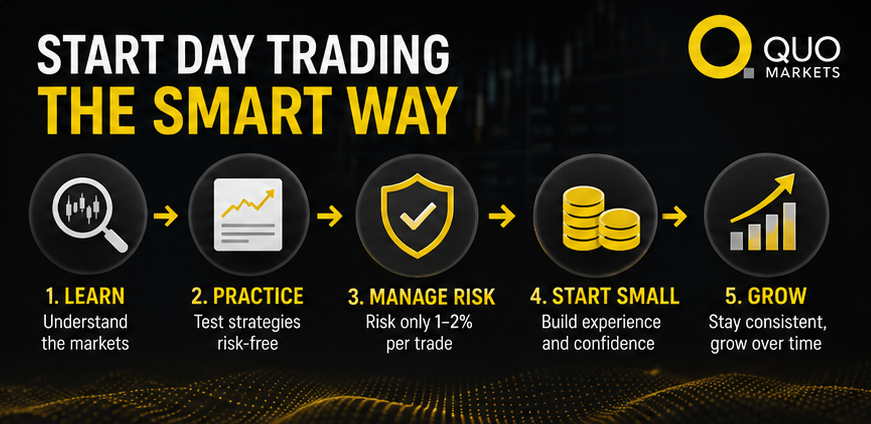
Not every trader starts with tens of thousands of dollars. Many retail traders begin with a small account and slowly build knowledge and experience before increasing their capital.
One common approach is trading smaller position sizes through instruments that allow fractional exposure. In forex trading, for example, traders can use micro lots to keep risk lower while learning how financial markets operate.
Another strategy is focusing on assets with low transaction costs and tight spreads. Reducing unnecessary expenses helps preserve trading capital while improving overall trading experience.
For traders with smaller balances, discipline becomes even more important. A small account usually cannot survive repeated losses without major damage. Strict risk management and carefully planned open positions are essential.
Beginner traders should also avoid chasing hot tips from online forums or speculative websites. Trading decisions based on hype instead of analysis frequently lead to substantial losses.
Instead, traders benefit more from developing deep knowledge in one particular market or sector. Some focus entirely on technology stocks, while others specialize in currencies or commodities. Understanding how specific assets behave can improve the quality of investment decisions over time.
Practicing strategies in simulated environments is also highly recommended before risking real money. Paper trading allows traders to test day trading strategies, study short-term trends, and observe market behavior without exposing real capital.
Patience matters too. Many experienced traders stress that long-term consistency rarely happens overnight. In the beginning, the main goal should be education and skill development rather than chasing immediate profits.
Final Thoughts
The question of how much money is needed for day trading has both a legal answer and a practical one. While twenty-five thousand dollars is the official threshold for U.S. stock day traders using margin accounts, the real requirement is having enough capital to survive market fluctuations and cover trading costs. Day trading is a high-risk environment where short-term price movements are often unpredictable and heavily influenced by institutional traders and high-frequency algorithms.
Succeeding in day trading requires much more than simply opening a brokerage account and buying a laptop. Traders need a solid understanding of financial instruments, disciplined risk management, and the emotional resilience to handle substantial losses. Most day traders lose money because they underestimate how complex financial markets truly are. Treat trading like a serious business rather than a hobby, focus on protecting capital before chasing profits, and never risk money needed for your everyday living expenses.
FAQs
What Happens If My Account Falls Below The Required Minimum?
If a pattern day trader account drops below the required balance, the trader will not be permitted to continue day trading until the account value is restored above the minimum requirement.
Why Do So Many Day Traders Lose Money?
Many day traders lose money because of high transaction costs, emotional decision-making, and unpredictable market volatility. Short-term trading requires discipline, skill, and strong risk management to survive consistently.
Can Beginners Start Day Trading With A Small Account?
Yes, but beginners should approach day trading cautiously. Starting with a small account, following strict risk management rules, and developing a structured trading strategy can help traders gain experience before increasing their capital.
Can I Day Trade with Less than $25,000?
Yes, but not through a U.S. stock margin account. Traders can use a cash account, although settlement rules create limitations, or they can trade markets such as forex, commodities, or futures, which follow different regulatory standards.